

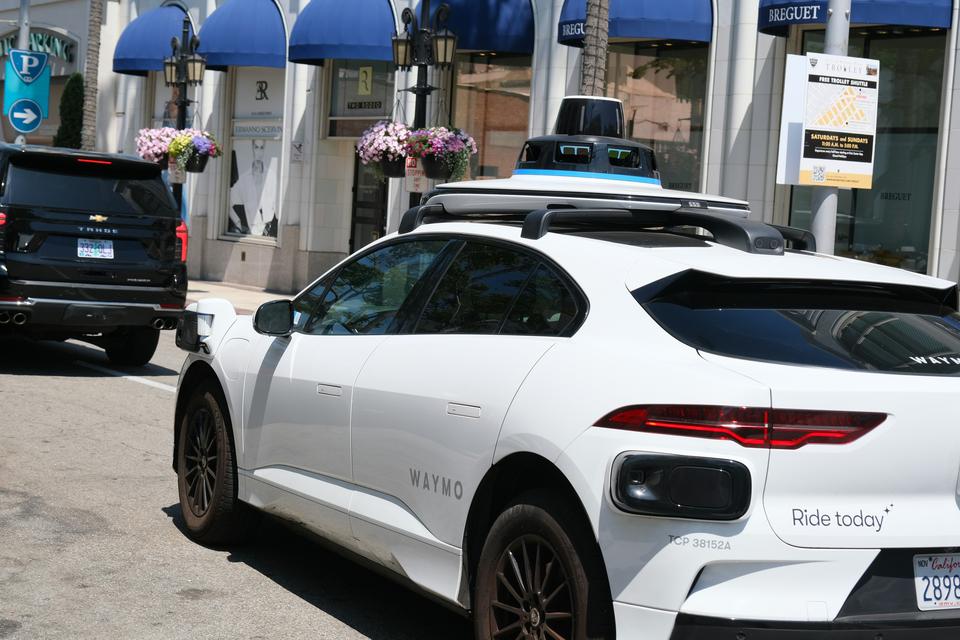
Robo taxi stocks have been in and out of the headlines of late with Tesla (NASDAQ: TSLA) proving somewhat durable following what’s believed to be the first robo taxi-related fatality, which occurred in Dallas.
From an investment perspective, the robo taxi stock race is largely framed as a two-horse affair between Tesla and Alphabet (NASDAQ: GOOG), which controls Waymo. That makes sense because Alphabet and Tesla are two of the world’s largest companies by market capitalization and two of the names most familiar to investors of all stripes.
However, familiarity and size can bely other opportunities in the still nascent robo taxi stock arena. Take the case of electric vehicle maker Lucid (LCID), shares of which surged on Wednesday, Sept. 16 after that company inked a major partnership with Bolt – a European competitor to Uber and Lyft.
“Combining Lucid's software-defined vehicle platform with insights from Bolt's European data, operating infrastructure, and mobility expertise, the companies aim to develop and introduce autonomous mobility services at scale,” according to a statement issued by the companies. “Building on vehicles from Lucid's upcoming Midsize platform, Bolt aims to deploy at least 25,000 fully autonomous vehicles across multiple European cities and countries, a major step toward Bolt's ambition of 100,000 autonomous vehicles on its platform by 2035.”
With Robo Taxi Stocks, Some Risk Tolerance Needed
Another reason why Alphabet and Tesla are viewed as the kings of the robo taxi stock competition is that they’re viewed as “safe,” relatively speaking. Said another way, some level of risk tolerance is needed for investors willing to venture deeper into this segment.
Take of the case of WeRide (NASDAQ: WRD), a small-cap Chinese company that’s considered one of the pure-play robo taxi stocks. “Small-cap Chinese” may imply a significant level of risk to some investors and there’s no getting around the fact this robo taxi stocks is down 35.2% year-to-date, but there may be something to see here because WeRide is working with Uber (NYSE: UBER) and AVOMO on robo taxi plans and there are signs of progress.
Earlier this month, the companies “announced that they have received Spain’s first national permit for Level 4 autonomous passenger vehicles to operate on public roads, from Spain’s Directorate General of Traffic (DGT) within the ES-AV framework,” according to a statement. “This authorization marks a major regulatory milestone toward the launch of Spain’s first commercial autonomous vehicle service.”
That’s not an endorsement of WeRide, but the point is when accounting for that stock, Lucid and Uber, there’s more to the robo taxi stock competition than just the “big two.” It’s merely a matter of how much risk investors are willing to accept in search of greater potential rewards.
Making Life Easy with Robo Taxi Stocks
That may seem like a contradiction in terms, but at minimum, investors interested in robo taxi stocks don’t needed to select individual names if they don’t want to. There’s a case for eschewing the stock-picking burden in this space because picking individual names can amplify risk.
For investors that want to take a broader approach to robo taxi stocks, the Roundhill Robotaxi, Autonomous Vehicles & Technology ETF (CABZ) is an ETF to consider.
The actively managed CABZ debuted in January and holds 30 stocks with Tesla and Alphabet combining for more than 15% of the portfolio.
