


The month of October is opening with the now all-too-familiar tension between an economy that continues to show a fighting spirit and Treasury yields that are rising to concerning levels. The stock market is finding this environment difficult to digest.
Major U.S. indexes finished the week mixed, with the Nasdaq Composite and S&P MidCap 400 gaining while the Dow and S&P 500 declined. The Russell 2000 was relatively unchanged. Beneath the headline indexes, however, market breadth deteriorated further, continuing another concerning trend of late. Large and mega-cap companies are the only things standing between a major downtrend, and if the hyperscalers, or the AI trade more generally, falters here, it could cause a rapid repricing of the indices.
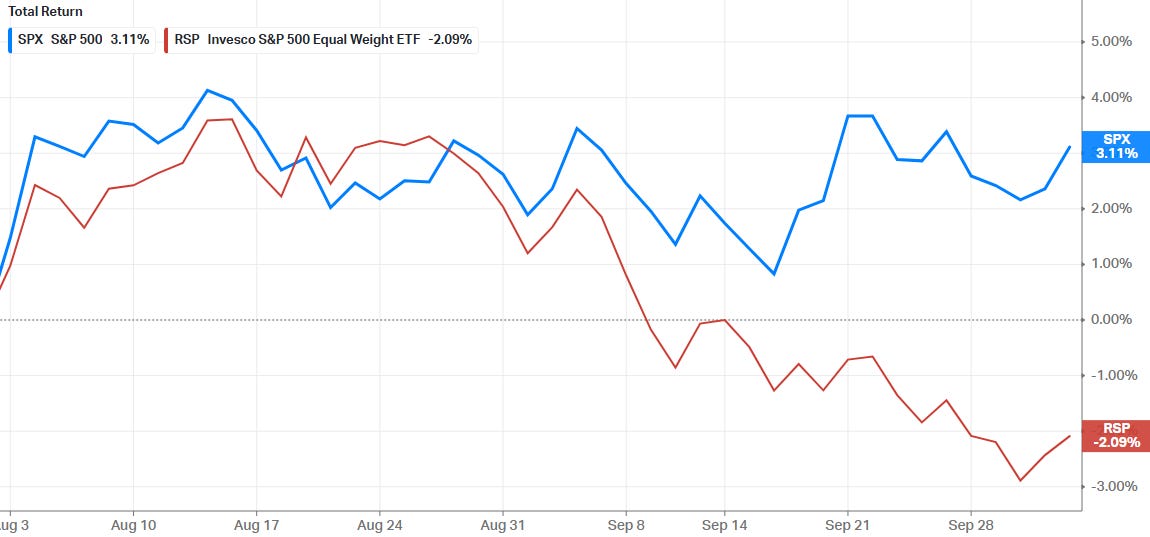
There is more than a 5% difference in performance between the market cap-weighted index and its equal-weight counterpart since August 1st.
Teflon econ(omy)
The week’s economic data offered cause for a little optimism and a little caution. September payroll growth slowed sharply, with the economy adding just 29,000 jobs, while the unemployment rate edged up to 4.2%. Although a major expectations miss, it follows a major expectation beat in August. Layoffs are low, and average payroll growth in 2026 is still well above the breakeven level, which is assumed to be somewhere between zero and 30,000.
I wrote about volatile month-to-month payroll reports several months back. Since then payrolls growth has been even higher than I expected, but we will still get surprises. The New Normal: Why the Job Reports Move Like a Yo-Yo
Additionally, second-quarter GDP growth was revised higher to 2.2%, consumer spending remains solid, and manufacturing activity has now expanded for nine consecutive months. Even though hiring is punishingly slow for those looking for work, the economy appears broadly healthy.
Inflation is cooling, but still hot to the touch
The latest inflation data took a little heat off this week, giving the Fed some welcome breathing room. Core PCE inflation rose 3.0% over the past year in August, while the three-month annualized rate slowed to 2.0%, reaching the Federal Reserve’s target for the first time in more than two years. Revisions also showed that inflation earlier this year was lower than previously estimated, with average core PCE inflation for the first eight months of 2026 revised down to 3.0% from 3.3%.
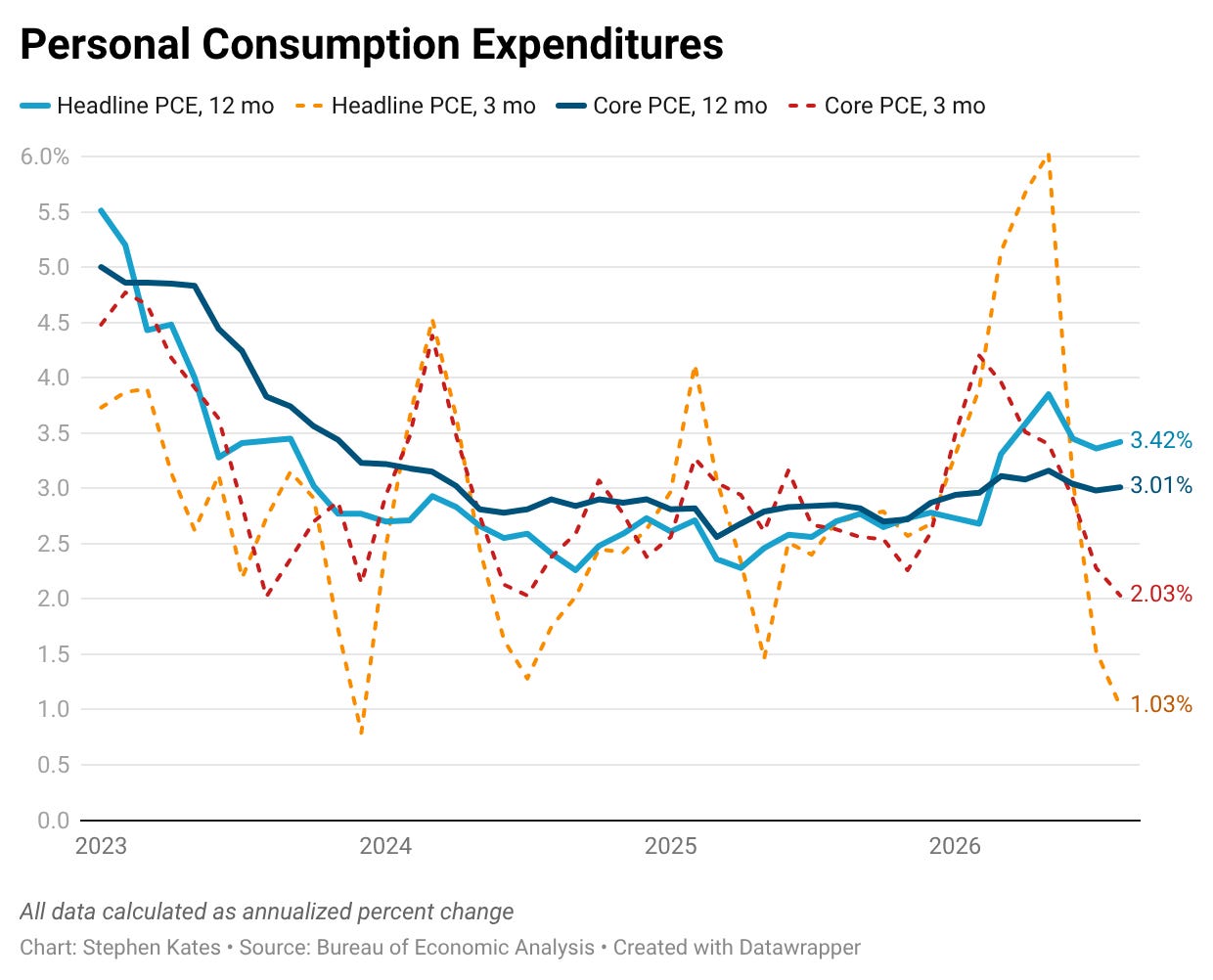
That is meaningful progress, but 3% inflation is still not 2% inflation, a key point many perma-doves seem to forget. The manufacturing survey also showed that price pressures are not exactly ready to leave the building, with the price index jumping to its highest level since May.
The softer employment data reduced expectations for an October rate hike, which would have prompted a firestorm ahead of the midterms if the PCE surprise had been in the other direction. The Fed now has a chance to digest two more months of data before the December meeting, and they will need it because although inflation is improving, it is not enough to eliminate the need for caution.
The bond market flexes
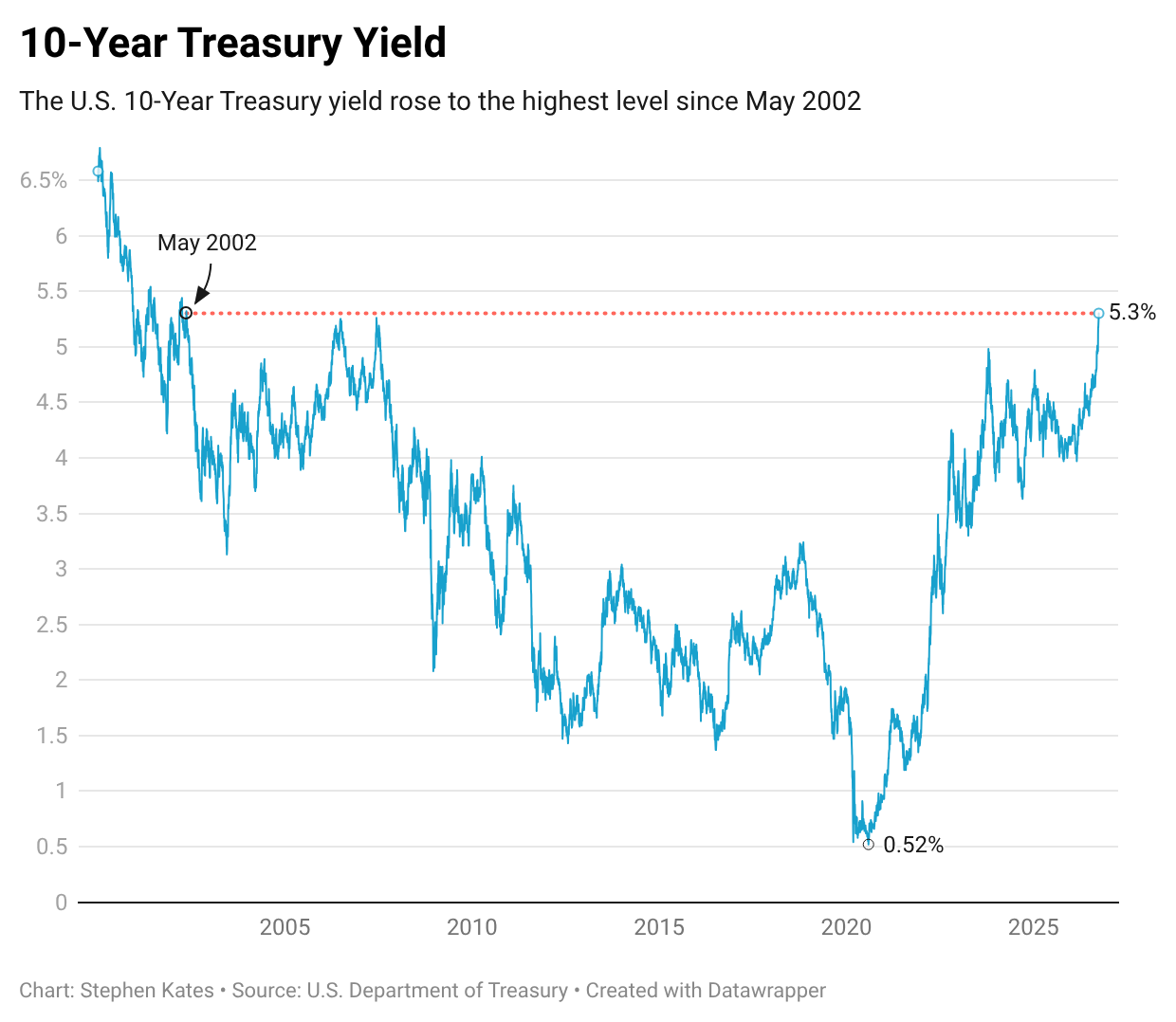
Treasury yields were the week’s more stubborn market story. Long-term yields reached multidecade highs before retreating, and the 10-year yield has risen roughly 50 basis points over the past month. That move is significant enough to test equity valuations, particularly in areas such as small-caps, utilities, and real estate that have been pressured by higher rates.
Don’t jump into major portfolio rebalancing yet, though. Rising yields do not automatically mean falling stocks. Historically, periods when both the 2-year and 10-year Treasury yields rose sharply have often been followed by positive equity returns when the underlying economy remained healthy, and it still is.
The 2002 episode was a notable exception, and it occurred against a very different backdrop of falling employment, weak industrial activity, and a fragile post-recession recovery.
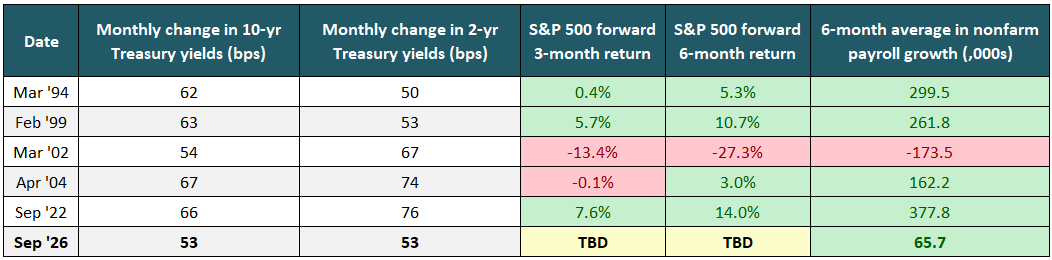
Source: FactSet data and S&P 500 total return history
Today’s market is not operating in that environment. Corporate profits are rising, consumer demand remains constructive, and manufacturing has moved back into expansion territory. While payrolls growth is noticeably weaker today in absolute terms, we remain above the breakeven rate, a key factor in assessing the economy.
That does not eliminate the risk from higher yields, particularly if rates continue climbing rapidly, but it does suggest that the bond market’s message is not a guaranteed recession ahead. The increase in yields may instead reflect expectations for continued economic growth alongside the concerns over oil and debt.
What this means for investors and what’s next
Next week brings a relatively light economic calendar, putting Treasury yields and oil prices in position to remain the most important near-term market drivers. Federal Reserve meeting minutes will be out on Wednesday, which will offer an interesting look behind how unanimous the last meeting really was. Given the softer employment situation and PCE inflation data, the minutes won’t need to be a crystal ball into October policy expectations.
If yields cool after their recent surge, beaten-down areas of the market could find room to recover, particularly ahead of the start of third-quarter earnings season on October 13. The very real risk is another leg higher in U.S. or global bond yields, which could put renewed pressure on equities even if economic and earnings data remain strong.
For investors, the key issue is increasingly whether strong economic growth and corporate profits can continue to offset valuation pressure created by higher interest rates. There is no shame in taking a personal step back on risk exposure in a turning point-laced market like this. There is no reason to think that the surprises are over this year, for better or worse.
Related: The 5% Treasury Yield Is Back. Are Higher Rates Becoming the New Normal?
