

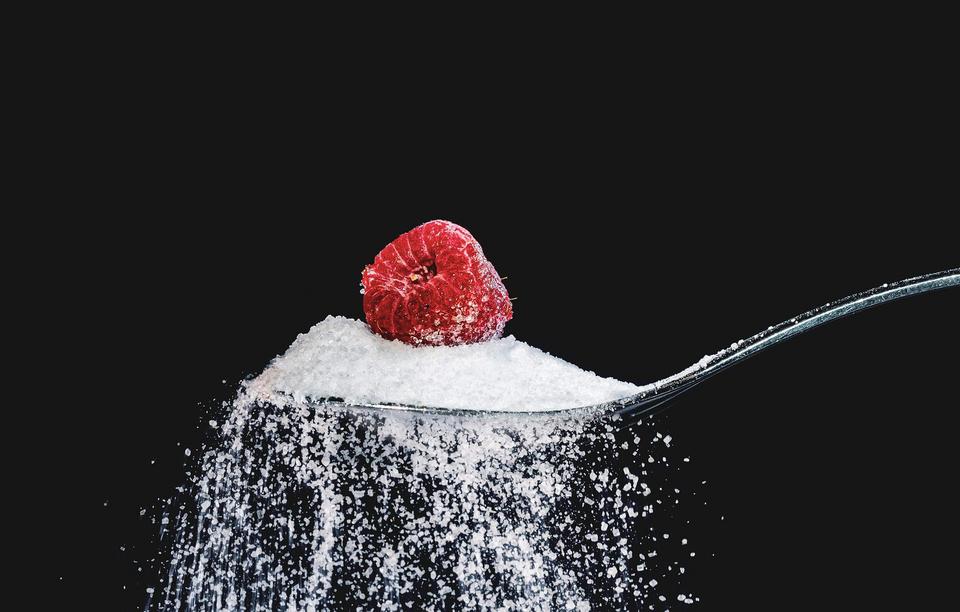
Over the past two weeks, I repeated something I’ve done every two years or so for the last eight. I put a glucose monitor on my arm and watched my own blood sugar. I’m not diabetic or prediabetic. I do it to learn how my body handles what I eat. These units have become smaller and more accurate since I first wore one, and you no longer need a doctor to get one. Over-the-counter versions are sold online, and a two-week sensor costs about $50. They give you instant accountability for what you do and what you put into your body.
Sugar-laden foods and simple carbohydrates like white rice, white bread, bagels, pasta, potatoes, crackers, pretzels, and juice really do spike blood sugar. Over time, elevated blood sugar makes us unwell and deteriorates our insides. Some of what spiked me I expected. Grapes did. Some surprised me, like jarred tomato sauce, which often has added sugar you’d never think to look for. Pizza, one of my worst offenders, spikes my blood sugar later than most foods because the fat in the cheese slows absorption. But it still spikes, and high.
What I’ve learned to watch most is how long it takes to come down. Mine comes down quickly, even after pizza, and I credit muscle. I wrote about why I strength train in “Going Beyond Awareness.” Here’s another reason. Muscle is where most of the sugar from a meal ends up. It’s the body’s biggest storage tank for glucose. The more muscle you have, and the more you use it, the more easily it pulls sugar out of the blood. That’s what insulin sensitivity means. It takes less insulin to do the same job. When I did this test years ago, my spikes ran higher. Now they’re lower and clear faster. I believe the difference is the muscle I’ve built since.
The bigger lesson is about timing. Sugar spikes, at least for me, every time I eat. What I eat decides how high. If I eat, let it dip, and eat again before it settles, the spikes come closer together. Before I know it, my average blood sugar is higher than it should be. You have to let it come down before piling on.
Piling on is how most of us eat. You go out to dinner Saturday night. Sunday brings a nice brunch, then Sunday dinner. Monday you promise yourself you’ll be good this week, and then a friend calls about wings and beer for Monday Night Football. Each meal lands on top of the last. Every spike calls for insulin. Insulin moves sugar out of the blood and into muscle and the liver, where it’s used or stored for later. But those tanks have limits. When we keep taking in more than we burn, which is exactly what piling on does, insulin helps store the excess as fat. And while insulin stays up, it slows the release of fat we’ve already stored. Insulin works both ways. It helps us store fat, and it makes it harder to burn what’s already there.
People look at me and assume I don’t have to watch my weight. What they don’t see is the habit. I don’t pile on.
It’s one of the reasons I stopped eating breakfast years ago and began intermittent fasting, long before it was fashionable. The idea that breakfast is the most important meal of the day is mostly a myth. In the early morning hours, before you wake, your body releases cortisol, growth hormone, and glucagon, which push blood sugar up on their own. You wake with fuel already on board. The same thing happens when I train hard. My blood sugar rises during a CrossFit workout because adrenaline tells the liver to release sugar. The body feeds itself when it needs to. So unless you’re going to sustain a workout longer than about 90 minutes, you don’t need sugar for energy. I never put it in my preworkout drink.
There was no breakfast waiting when our prehistoric ancestors woke up, and our physiology is pretty much the same as theirs. Food came after effort, not before it. The feeling that you need to eat first thing is mostly habit. Hunger hormones learn your schedule and rise at the times you usually eat. Change the schedule and the hunger follows. Most of what we call appetite is really a learned automatic pattern.
The number most doctors look at is the A1c, a three-month average of blood sugar. It’s useful, but an average can look fine while hiding exactly what a monitor shows you: a spike, a dip, then another spike. Few doctors suggest a monitor to someone without diabetes, and fewer know what to do with the readings. Ask how many people with diabetes or prediabetes are told by their doctor to start strength training. Muscle is the tank where the sugar goes, yet most patients leave with a diet sheet or a prescription. Doctors should be your guides, but many haven’t been taught this themselves. Nobody is going to watch your numbers for you. The data is there. Many times, you have to be the one who goes after it.
This time around I also tried acarbose, a prescription drug that slows the breakdown of starches in the gut so sugar enters the blood more gradually. It’s prescribed for diabetes, and it can cause gas and bloating, so it’s something to talk through with a doctor before trying. It did blunt the first spike. But because it slows digestion rather than stopping it, the same food was absorbed later and I got a second spike, almost as if I’d piled on. I only see that double spike when I take acarbose. So I’m rethinking how I use it. I’ll probably save it for the occasional foods that send my sugar way up, like pizza night. It isn’t an excuse to eat poorly.
Thanksgiving is coming up. I’ll take the acarbose with my first bite of mashed potatoes. Then I’ll let my sugar come down before I go anywhere near the pie. And I’ll do more than go near it.
Related: The Reedsy Impersonation Scam Targeting Authors, and Why Smart People Fall for It