
Fear, uncertainty, and the choices still left to us
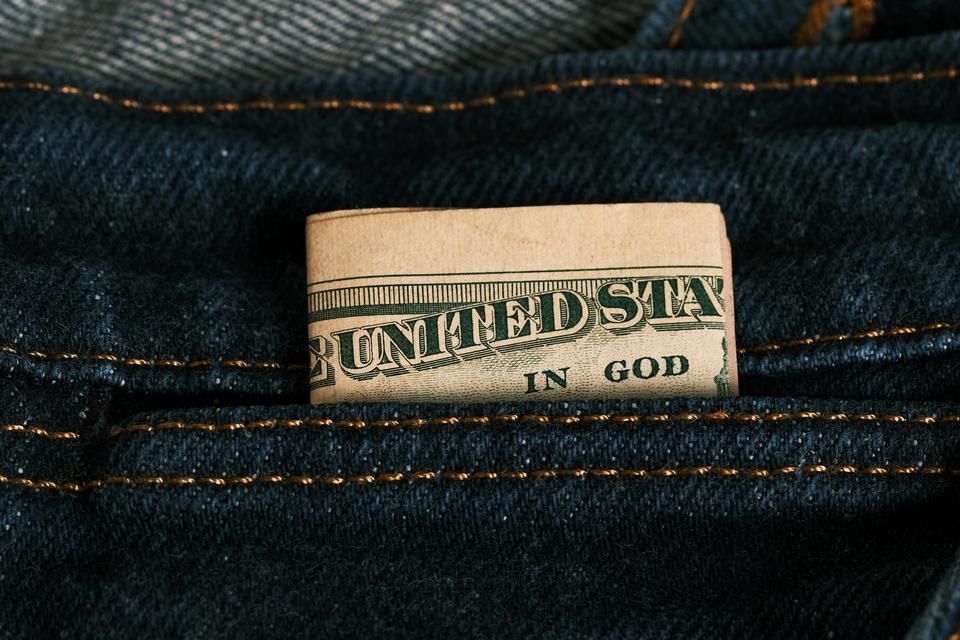
Recently, I found myself in a government building, looking up at a wall, and there it was: "In God We Trust." The familiar motto first appeared on an American coin in 1864. Congress required it on all U.S. currency in 1955, and a year later made it the official national motto.
Most of us see it so often we don’t give it a second thought.
But what does it actually mean to trust in God? And why am I writing about it?
Because let’s be honest, not everyone’s life is so great. One doesn’t have to look very far to see hardship and real suffering around us. In fact, if we want to get really grim about it, life itself is pretty bleak. After all, everything and everyone we know, cherish, and love, including our own life, is finite. It will go away, and often we will be left with a gaping hole in our heart. So where is this God whom we are supposed to trust?
Ever since I was a child, I have wondered about where the universe began and where it ended. But it doesn’t end and I’d wonder what that means. One thing that fascinated me about math, and perhaps why I majored in it in college, was that I could solve a problem and it was finite. But as my studies advanced, I’d recognize we were always factoring in the “infinity” problem just to make the equations work. This infinity issue still crops up and, for me, is one that our physical world and all our knowledge and intellect cannot reconcile.
So that begs the question: what can we believe in, or dare I say trust in? Can we believe and trust that what we see, feel, hear, taste, and smell is all that there is? That the world we perceive and experience, is it? I write about fear, and the very contemplation of the vast unknown is a reliable trigger of fear.
To avoid that trigger, many of us dig our heels into the physical world and culture. We live within the realities of these, while loosely holding on to a belief in something more ethereal, never quite letting the two meet. Except every now and again, we sense it anyway. Standing on a mountain top, holding a newborn in your arms, experiencing a coincidence with extreme odds, or feeling the spine tingle while listening to a piece of music.
If there is a God, as I believe, I don’t think our job while we’re here is to spend our whole lives trying to solve an unsolvable question. Maybe our job is simply to decide how we’re going to live while we’re asking it. That’s really the difference between the Automatic Brain and the Mind. The Automatic Brain runs on instinct — it senses danger and reacts, nothing more. The Mind can choose something better: Integrity, Courage, Self-Discipline, Self-Control, Forgiveness, Humility, and Love.
These are a direct gift. Not instructions handed down, but capacities built into us, the freedom to choose them or not. We can be afraid and still choose courage, be hurt and still choose forgiveness, have every opportunity to take advantage of someone and choose integrity instead. Animals may show flashes of loyalty or restraint, but they don’t build a life around virtues chosen against their own instinct. We can. You don’t have to believe in a Giver to notice the gift is real. Whatever put that capacity in us, believer or not, it’s there, and it’s ours to use or waste.
So when we say In God We Trust, I don’t think it means trusting that nothing terrible will happen. History makes that impossible to believe. It doesn’t mean the people I love will stay, that I’ll stay healthy, that my plans will work out. What it means to me is trusting that whatever comes, I still have the freedom to choose how I meet it: fear or courage, bitterness or forgiveness, reaction or reflection. That trust doesn’t erase the fear. It just gives us something sturdier to stand on while we carry it.
If you’ve ever wondered what trust even means when life doesn’t cooperate, Fear Is a Liar goes much deeper.
