

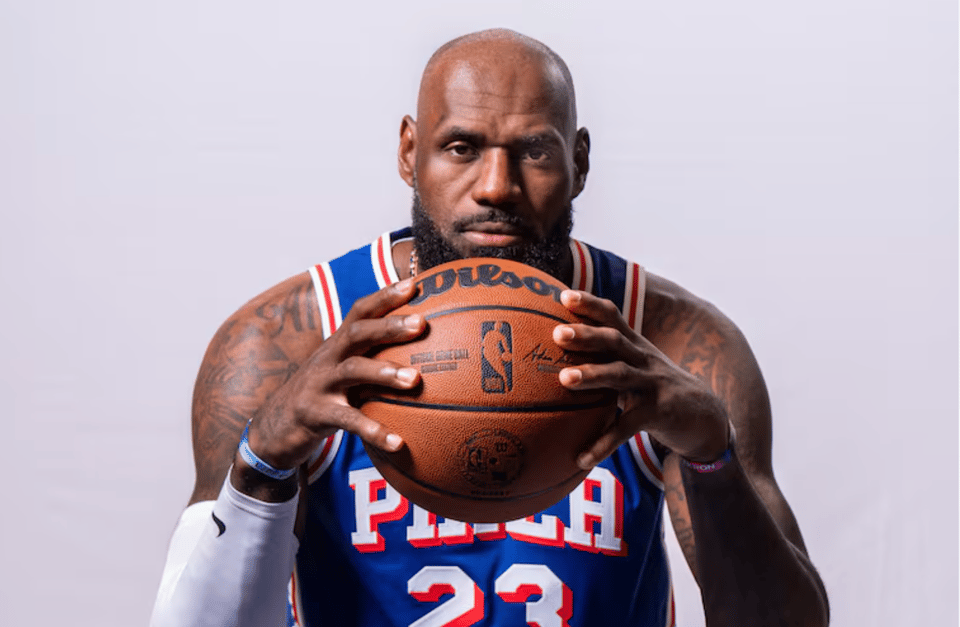
NBA had Media Day this week, marking the start of LeBron James’s historic 24th NBA season, which he will play as a member of the Philadelphia 76ers.
At 41, he’s joining a team with former MVP Joel Embiid, Tyrese Maxey, Jaylen Brown, and young star V.J. Edgecombe. We’ll get our first real look at what this version of the Sixers might look like. Personally, I’m interested to see how much James has left in the tank. But I still have my Knicks, the defending champs, as the team to beat in the East.
Today, however, I want to focus on Lebron’s contract.
Back in July, LeBron signed a two-year deal with Philly worth $8 million. That’s a really small number for someone who made nearly $53 million last season and has earned more than $500 million in NBA salary over his career. In fact, this contract pays him less than his rookie deal did back in 2003!
LeBron has said his longstanding friendship with Maxey and his desire to help Embiid win a championship were significant factors in choosing Philadelphia. He could have pursued a much larger contract, but at this stage of his career, money is clearly only one of the things he’s weighing.
And I think that has a lot to do with what LeBron has spent the last 20 years building away from the basketball court.
When an athlete becomes famous, the obvious way to monetize that fame is through endorsements. You have an audience that wants to hear from you, companies want access to that audience, and you get paid for lending your name and credibility to their products.
LeBron certainly did that. But relatively early in his career, he and his longtime business partner Maverick Carter started thinking about the opportunity differently. Rather than simply selling access to LeBron’s audience, they began building businesses and ownership interests around it.
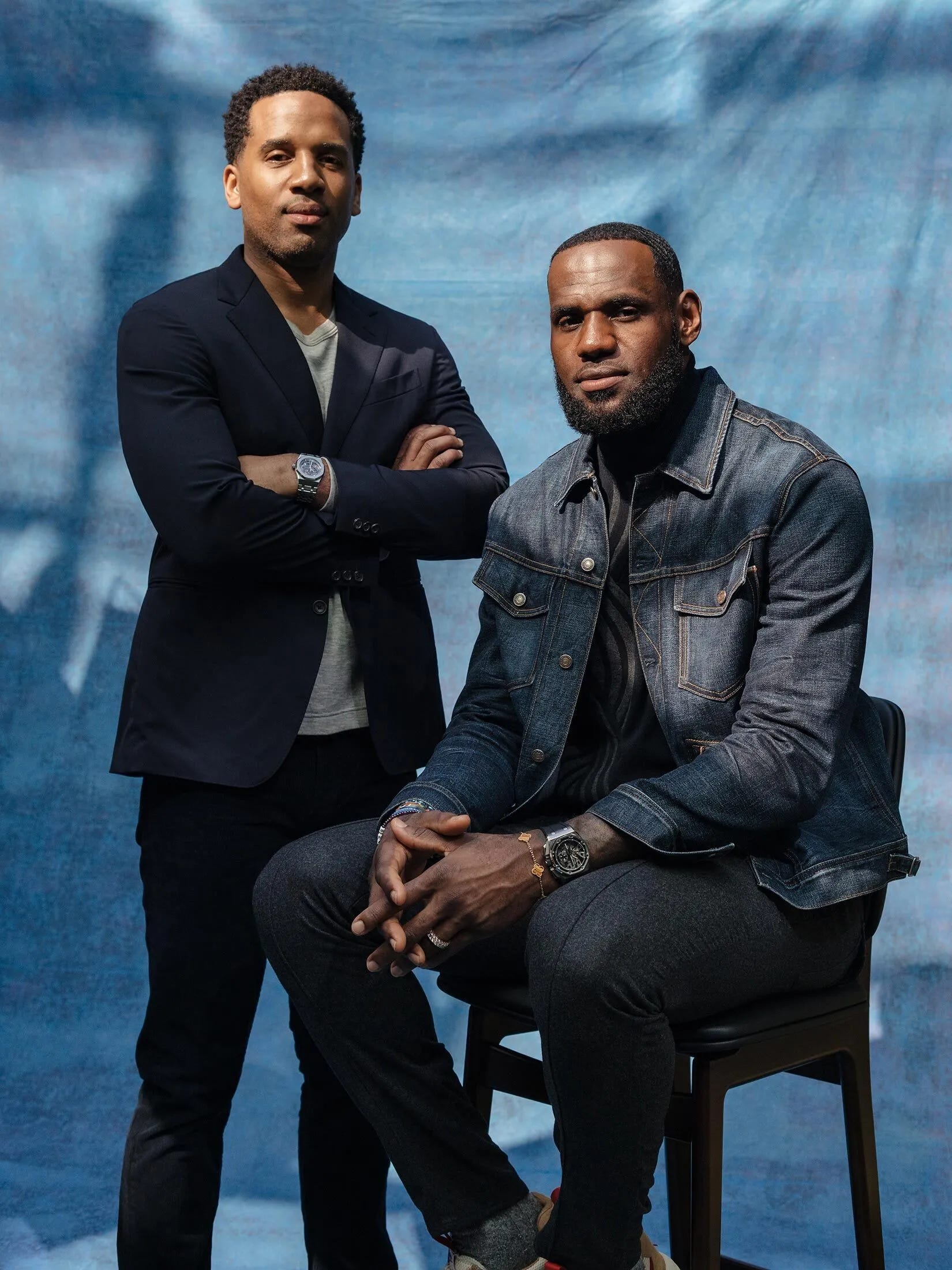
That meant treating LeBron’s fame less like a paycheck and more like a piece of infrastructure.
The distinction between those two approaches is enormous. If a company pays you to endorse a product, you receive income. If you own part of the business being built around your audience, you have an asset whose value can increase as that business grows. One compensates you for your contribution today; the other gives you an economic claim on what that contribution might be worth tomorrow.
LeBron’s business history shows a remarkably consistent progression from one to the other.
In 2011, Fenway Sports Management acquired a 50% stake in LeBron James’ marketing and brand rights via LRMR. A decade later, in 2021, LeBron and Carter became part of Fenway Sports Group’s ownership group as part of RedBird Capital’s investment in the company, which was based on a $7.35 billion enterprise valuation for FSG. FSG also became a minority owner of The SpringHill Company, the consumer and entertainment company created and built by LeBron and Carter, later that year.
LeBron’s basketball ability created attention on a scale that very few people in the world could replicate. That attention created relationships with companies, investors, entrepreneurs and other owners. Those relationships created opportunities to build businesses and acquire ownership stakes. Over time, more of the economic value associated with LeBron’s name became connected to assets rather than simply to his next endorsement check or NBA contract.
That’s a very different way to think about a career. And it helps explain why I don’t think the $8 million Sixers contract should be viewed simply as “LeBron leaving money on the table.”
The point of building wealth is that eventually you have more choices about what to do with your time and your talent.
That’s one of the things I like about studying the business side of sports. At the highest level, athletes can be the source of intellectual property, distribution, brand equity, customer attention and relationships that have economic value well beyond the playing field.
LeBron and Carter began pursuing that approach relatively early in his career. The basketball career was the original asset. Everything else was built on top of it.
LeBron is obviously still obsessed with winning (if he gets one more ring I have him over Jordan as the GOAT). But he also understands the long game.
That’s where the story gets particularly relevant to business owners. A lot of successful businesses have an asset that is more valuable than the product they’re currently selling. It might be a customer base, a distribution network, a technology platform, a brand, proprietary data or a relationship with a particular market. The business may begin by monetizing one thing, but the real opportunity is what that asset allows the company to do next.
Amazon is an obvious example. Its retail business helped create customers, logistics infrastructure and technology capabilities that eventually supported AWS and other major businesses, including advertising. AWS itself grew out of Amazon’s experience dealing with the difficulty and expense of building IT infrastructure for its own operations.
Microsoft built its original software empire and then used its installed base, enterprise relationships and distribution capabilities to build entirely new businesses, including Azure. Microsoft describes Azure as a broad cloud platform serving developers, IT professionals and enterprises, while its sales and distribution network spans OEMs, direct sales, distributors, resellers and partners.
Nvidia has done something similar in computing. The company’s original expertise was graphics processing, but its 2006 introduction of CUDA opened the door to using GPUs for a much broader range of computing applications. That eventually became a foundation for accelerated computing and AI.
LeBron’s story isn’t the same as any of those businesses, obviously. But the underlying question is similar: What does the asset you already have allow you to do next?
That’s a question I think is worth asking whether you’re running a company, building a career or investing in one.
If you’re a business owner, perhaps the thing that matters most isn’t this year’s revenue but the customer relationships you’ve built that could support another product. If you’re an entrepreneur, maybe your distribution or reputation is more valuable than the first business you built with it. And if you’re investing in a growth company, one of the most important things to understand is whether its existing assets can open markets that aren’t reflected in today’s numbers.
LeBron’s career gives us a great case study in this idea because the original asset is so obvious.
He could play basketball better than almost anyone in the world. That created an audience. The audience created opportunities. He and Carter turned those opportunities into businesses and ownership.
And now the life built around that original talent gives LeBron something much more valuable than another $30 million contract: choice.
