
Over the summer, I attended Worth magazine’s Living Well conference in New York and spent the better part of a day listening to very smart people talk about how we might live longer and better.
There were discussions about AI diagnostics, advanced imaging, blood testing, wearables, full-body MRIs, and digital twins of our organs that might someday help predict what will happen inside our bodies before it actually happens.
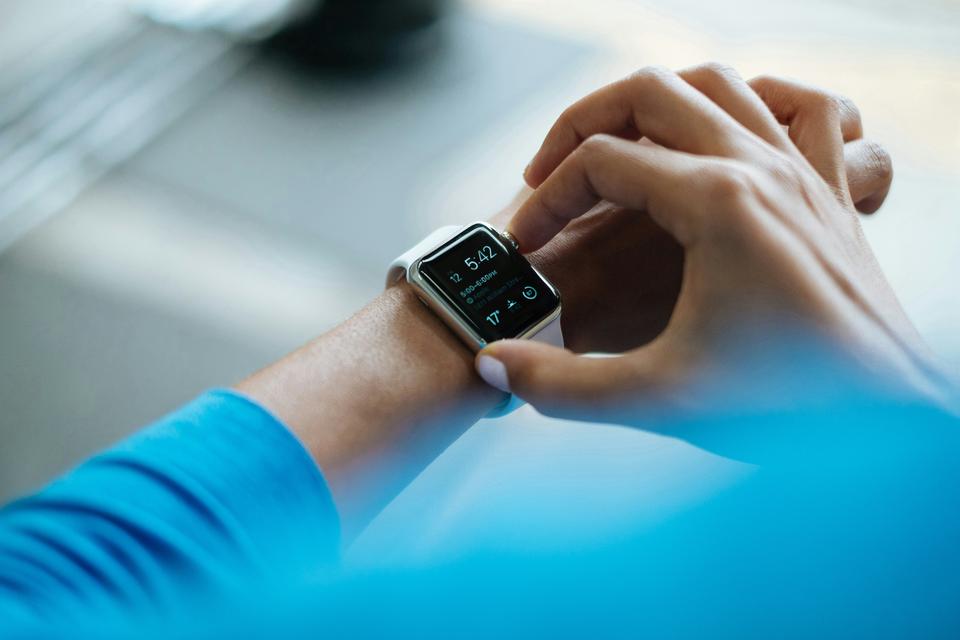
I thought about my Apple Watch and all its health monitors and realized I was clearly in the right place. I can track an impressive—and slightly ridiculous—number of things happening inside my own body. Somewhere along the way, however, my “health” had started to look like a dashboard, full of scores, trends, alerts, and tiny arrows telling me whether TOMetrics Inc. was up or down for the day. It reminded me of stock tickers and the flashing data points on CNBC: an endless stream of information that creates the irresistible feeling that I should be doing something about it.
Whenever the conversation at the conference moved from what we can measure to what people should actually do, the answers became considerably less futuristic: sleep, move, eat reasonably well, maintain relationships, and have something worth getting out of bed for.
Apparently, we as a society have spent billions of dollars on research and technological development to validate your grandmother’s advice on longevity.
The Longevity Paradox: The metrics are willing but the flesh is weak
I am pro technology and usually an early adopter. If a blood test can identify disease earlier, I want it. If AI can spot something on an MRI that a radiologist might miss, fantastic. If a wearable tells me I’m sleeping terribly despite my insistence otherwise, that’s useful information.
But the longevity movement has developed an interesting problem: Our ability to measure ourselves is advancing much faster than our willingness to change ourselves.
Consider exercise. In 2024, the World Health Organization reported that 31% of adults worldwide weren’t getting recommended levels of physical activity. People who are insufficiently active have a 20% to 30% greater risk of death than people who are sufficiently active. Regular physical activity is associated with lower risks of cardiovascular disease, diabetes, several cancers, depression, and cognitive decline.
Do you need an app or device to tell you this? No. Does knowing this make it any easier to get more exercise? If it did, one-third of us wouldn’t be stuck on the couch.
Nutrition tells a similar story. A 2025 Nature Medicine study involving more than 105,000 people examined eight different healthy dietary patterns using data spanning as much as 30 years. The diets differed, but the larger conclusion was remarkably boring: People who consistently ate more fruits, vegetables, whole grains, nuts, legumes, and unsaturated fats had better odds of reaching older age with their physical, cognitive and mental health intact.
Again, none of us need to ask Siri or Alexa or Claude if more exercise and healthier food are good for longevity.
My body has become a dashboard
I should admit that I am precisely the customer the longevity technology industry is looking for. I told you about the Apple Watch. Recently, I added a Hume Smart Scale (which came with a free eye-roll from my wife at my acquisition of yet another gadget for my “health”). Naturally, the scale has an app that resides in my Health folder on my phone, the same locale as the Sleep app I can use if I forget how to sleep.
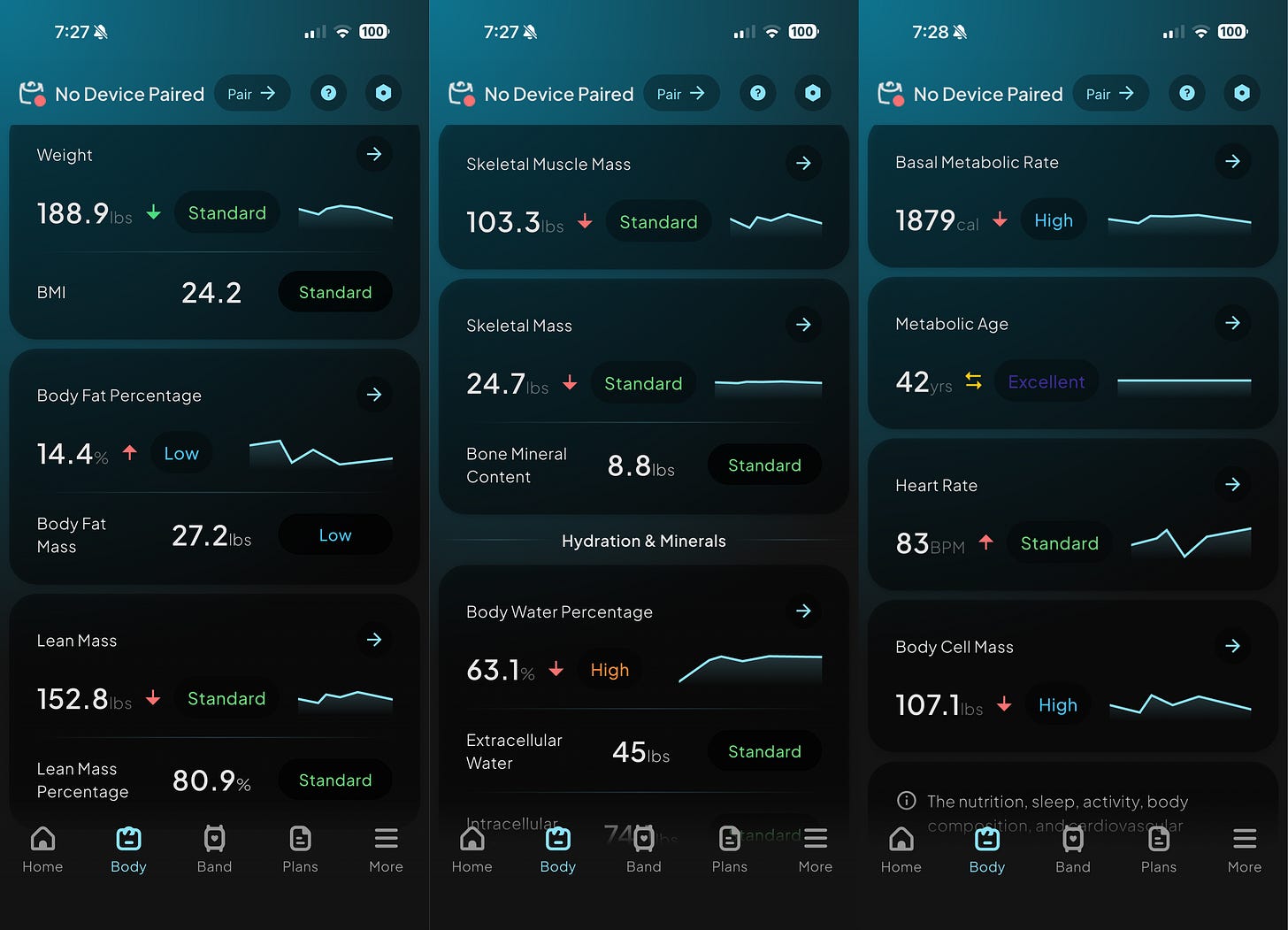
Why worry about only my weight when I could also worry about 44 other metrics?
Between my two new devices, I now have an impressive collection of information about myself: steps, heart rate, exercise, sleep, weight, body composition, trends, changes, and alerts. I can open an app and inspect myself like I’m reviewing the quarterly results of a slightly underperforming public company. I love this stuff. Give me another chart and I’ll look at it.
But I’ve spent most of my career in financial planning, and something about all these health dashboards feels strangely familiar.
We’ve already done this with money.
Investors can now monitor their net worth, portfolio performance, asset allocation, spending, cash flow, taxes, retirement probabilities, and market movements practically by the minute. We have more financial information available to us than any previous generation in history.
It hasn’t necessarily made us better investors. In fact, financial advisors have spent years trying to convince people not to react to every piece of information their dashboards provide.
Your portfolio falls 1.7% on Tuesday. Do something! One investment underperforms for six months. Change it! Your retirement projection drops from a 93% probability of success to 89%. Panic!
More measurement doesn’t necessarily produce better decisions. Sometimes it just produces more opportunities to make bad ones.
Are we now doing the same thing to our bodies?
Your body is not a stock ticker
My Apple Watch can produce a beautifully rendered analysis showing that I haven’t moved enough today and precisely quantify the amount of non-movement between me and my daily movement goal. My Hume scale can chart changes in my weight and body composition with impressive precision. This health data has value for charting progress, creating accountability, and identifying problems we might miss.
But like markets, bodies are noisy and dynamic things. I remember my doctor saying something along those lines when I asked about a slight outlier from an over-enthusiastic diagnostic reading from one of my measurement tools.
Our sleep varies, our weight fluctuates, our heart rate and blood pressure and other vitals vary from day to day, sometimes for no clear reason. This is (usually) the normal operation of a dynamic system. However, the more frequently we measure that system, the more “abnormalities” we’ll discover, which leads to a powerful urge to fix something that is probably not broken.
If it were about money, I’d probably remember what behavioral economists call this: **action bias—**doing something feels better than doing nothing, even when doing nothing is the better decision.
Financial advisors know this problem intimately. Sometimes the best response to market volatility is to keep following the plan. Health may increasingly require the same discipline.
Complexity feels like progress
There’s another reason longevity hacks are so seductive: complicated solutions allow us to feel like we’re taking action without necessarily changing how we live.
Buying a wearable is easier than going to bed earlier. Ordering supplements is easier than losing 15 pounds. Getting an advanced scan is easier than exercising four days a week. Researching the optimal diet is easier than eating vegetables tonight. Obsessing about your health metrics is less psychological work than finally calling the friend or family member you’ve been meaning to get back in touch with for six months.
Complexity also has better marketing. There isn’t much money in telling someone to go for a walk. There’s considerably more money in selling a device that measures 37 physiological variables while they’re going for the walk.
That doesn’t make the device useless. But it does create an incentive problem.
Products need differentiation. Differentiation requires features. Features create complexity. Eventually we begin believing that longevity itself must be complicated … more than it probably is.
The boring longevity portfolio
The financial analogy offers another useful lesson. A good financial dashboard isn’t supposed to give you 37 new things to worry about. It’s supposed to tell you whether you’re still heading roughly in the right direction and alert you when something important has changed.
Health technology should probably work the same way.
Use the MRI. Get the bloodwork. Wear the watch. Step on the smart scale. Talk to the longevity doctor. Technology should help identify meaningful deviations and risks that aren’t obvious.
But it should sit on top of the fundamentals, not replace them.
One speaker at the Worth conference reduced those fundamentals to three words:
- Move (get your body in motion)
- Nourish (eat reasonably well)
- Rest (give yourself time to recover)
At first, my monkey brain wondered if that was the name of a new app. Nope. And simplicity started making a lot more sense mid-presentation. I even added two more fundamentals:
- Connect (maintain relationships with the ones you care about)
- Matter (have a reason to get out of bed and through each day)
Technology can definitely help with these fundamentals, and the future of longevity may involve digital twins, predictive diagnostics, AI-assisted medicine, and treatments we haven’t imagined yet. I hope it does, and I’ll probably download the app.
But financial planning taught me something that longevity medicine may eventually have to learn: **more information doesn’t necessarily make people better investors, and more health data won’t necessarily make us healthier. **Knowing more and doing better aren’t the same thing.
In the meantime, my Apple Watch, Hume scale, and several thousand dollars’ worth of technology are occasionally delivering a remarkably consistent recommendation:
Tom, get up, go out, and for the love of all that is healthy, give the dashboard a rest.
