

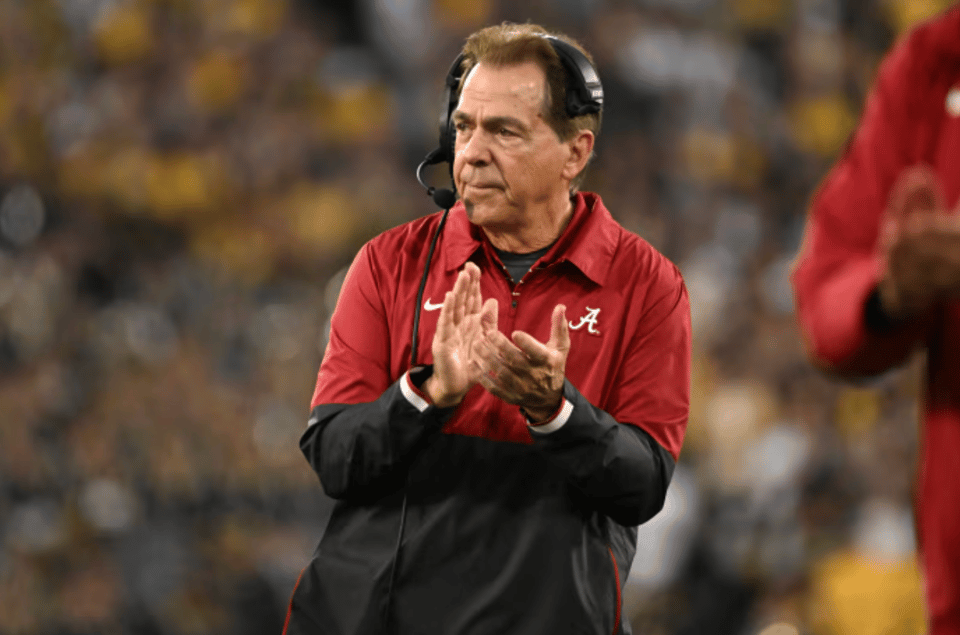
Nick Saban, former head coach of the University of Alabama football team, built one of the most dominant programs in college football history by teaching his players something surprising: stop thinking about winning. Not the championship. Not the game. Not even the final score. His players were trained to narrow their attention to a much smaller target, one that lasted only a few seconds.
Most football teams, and most investors, do the opposite. They fixate on the scoreboard and allow the current score to influence what they do next. But this habit of scoreboard watching may actually make long-term success harder.
Saban’s strategy didn’t just work in college football. It offers investors a better way to define progress, focus their attention, and make better decisions.
The Next Seven Seconds
The average college football play lasts only a handful of seconds. Saban’s players were taught to focus all their attention and effort on executing that one play correctly. When it ended, they moved to the next one.
If the previous play went well, they could not afford to become overconfident. If it went poorly, they could not waste the next play replaying the mistake in their minds. They had to let it go, return to their training, and execute again.
Play after play. Seven seconds at a time.
This was the foundation of what Saban called “the Process.” Winning was the desired outcome, but it was not the immediate task. Players could not directly control the final score. They could control their preparation, effort, discipline, and execution on the next play. When enough individual plays were executed well, wins followed.
That distinction matters enormously for investors.
Investors Keep Watching the Wrong Scoreboard
For investors, the final score might be retirement, financial independence, a child’s education, a charitable legacy, or simply the freedom to live without constant financial worry. Investment returns help fund those goals, so naturally we pay attention to them.
The problem begins when we use short-term returns to judge the quality of our decisions.
A portfolio rises sharply, and we conclude that buying it was a good decision. Another investment declines, and we assume someone made a mistake. But over short periods, good decisions can produce disappointing results, while poor decisions can be rewarded.
This is known as outcome bias: our tendency to judge a decision by what happened rather than by the quality of the process used to make it.
What Is an Investor’s “Next Play”?
An investor’s next play is not the market’s next move. It is the next decision within the investor’s control.
That might mean:
- Continuing an automatic contribution while the market is down
- Rebalancing according to a predetermined rule rather than an emotion
- Reviewing the financial plan before reacting to a headline
- Ignoring a forecast that has no bearing on long-term goals
- Holding a diversified portfolio when one sector is producing outsize returns
- Waiting a specified amount of time before making a fear-driven portfolio change
- Choosing not to react
None of these actions is exciting enough to receive financial-media coverage. Yet these are the small choices from which long-term outcomes are built.
The long term is not a place we suddenly arrive at years from now. It is the accumulation of what we do today, this week, this month, and this year.
Redefining a Win
One reason disciplined investing is difficult is that the rewards are delayed. Investors can follow a sound process for months and still see disappointing results. Meanwhile, someone chasing a fashionable investment may appear to be thriving.
If success is defined only by recent performance, disciplined investors will frequently feel as though they are losing.
We need a better definition of a win.
A win is not necessarily outperforming the market this quarter. It may be:
- Following the plan during a frightening decline
- Resisting the temptation to chase what has recently done well
- Saving more when lifestyle spending could easily have absorbed the money
- Staying diversified when concentration looks more rewarding
- Separating a compelling story from useful evidence
- Making a thoughtful decision without needing certainty first
These are behavioral wins. They will not always produce an immediate financial reward, but they improve the odds of reaching the outcome that matters.
This shift also helps counter outcome bias. Instead of asking, “Did this decision make money?” ask:
- Was it consistent with my plan?
- Was it based on evidence rather than emotion or prediction?
- Did I understand the risks and tradeoffs?
- Would I consider this a sound decision if the short-term outcome had been different?
That final question is especially powerful. It forces us to evaluate the decision before allowing the outcome to rewrite the story.
Your Next Play
Investors naturally want certainty about the economy, elections, interest rates, inflation, and markets. But long-term success rarely depends on correctly predicting each of them. It depends far more on responding thoughtfully when the future refuses to cooperate with our expectations.
That is the genius of focusing on the next play. It reduces an overwhelming, uncertain future to a decision we can actually make.
We do not control what the market does tomorrow. We control whether we chase, panic, speculate, save, rebalance, wait, or remain disciplined. We control what receives our attention and whether a financial plan or the latest headline becomes our anchor.
The championship still matters. The long-term goals still matter. But staring at the scoreboard will not help us reach them.
Focus on the next decision. Execute it well. Then do it again.
The long term will be built one play at a time.
Related: The Financially Optimal Decision Isn’t Always the Best Decision
