


U.S. stocks delivered a chaotic performance this week, with performance diverging primarily by sector. Investors are still uneasy about capital spending and borrowing costs as concerns mount about whether a true return on investment is even possible for some companies.
Technology-heavy indices struggled mightily, but the slide wasn’t universal. As much as technology dominates the cap-weighted indices, the sector weakness didn’t spill over and drag everything down. Small-cap stocks and defensive sectors showed strength and provided significant support. The rotation, which is now stretching on for many weeks, demonstrates that investors are taking headwinds like inflation, debt, and spending seriously. But they are not panicking.
The Russell 2000 led the major U.S. benchmarks, gaining 2.00%, while the Dow Jones Industrial Average advanced 0.41%. The S&P 500 slipped 0.47%, and the Nasdaq Composite fell 0.71%. Value stocks outperformed growth stocks for a third consecutive week, while the equal-weighted S&P 500’s recent strength (+2%) points to improving participation beyond the large technology names.
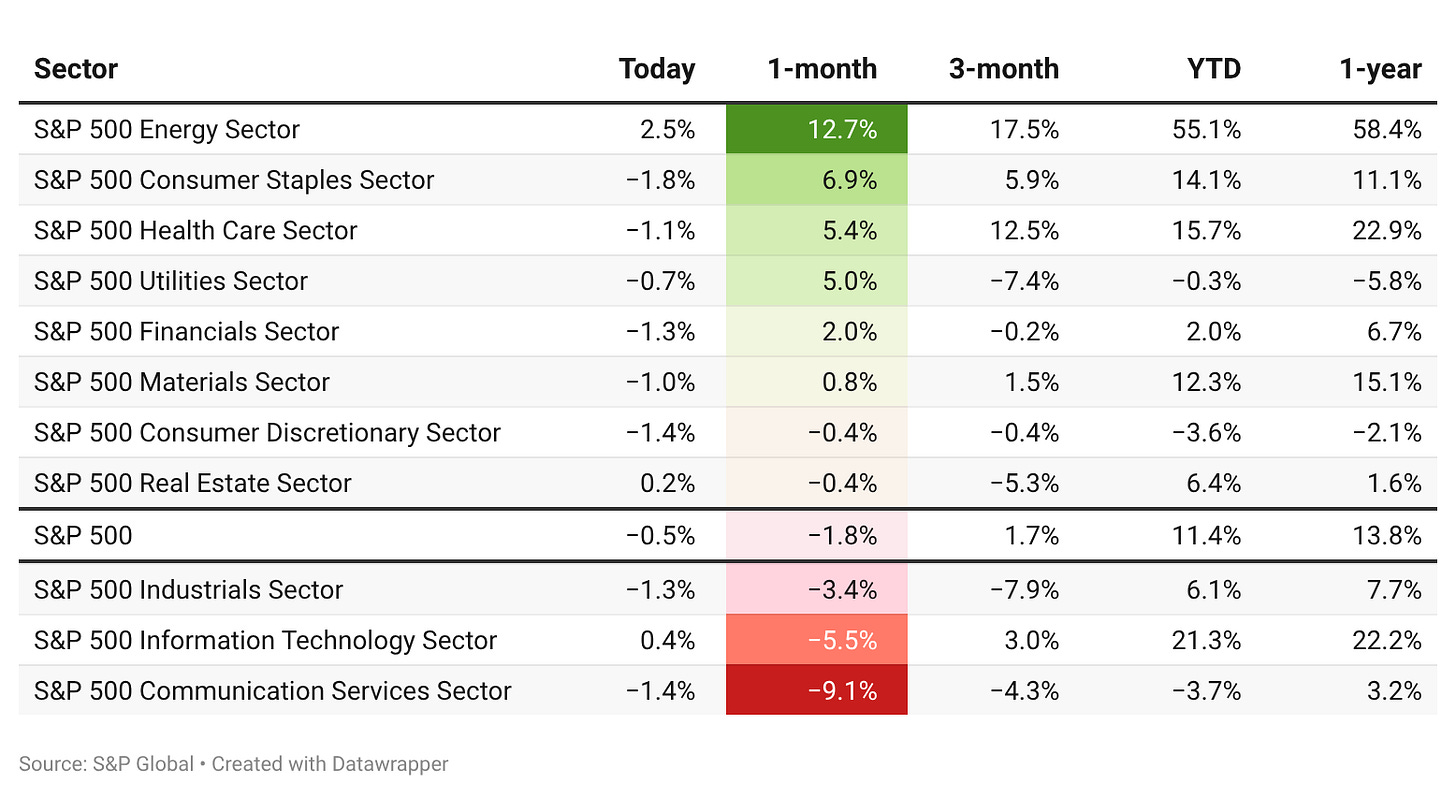
The broad resilience is encouraging, but there are signs of cracking in the technicals. The S&P 500 moved below its 50-day moving average, while the Nasdaq Composite and Nasdaq 100 approached key technical support levels as well. With several major technology earnings reports ahead, the health of the AI trade could help determine whether the broader market stabilizes or continues to pull back.
The US (and global) stock markets are not defined only by large US tech, or even the S&P 500, but those still carry a strong gravitational pull. Further weakness could still spread. Given Q3 earnings expectations, more selling in technology and communication services could deliver both an uncomfortable Q4 and the juiciest valuations in years.
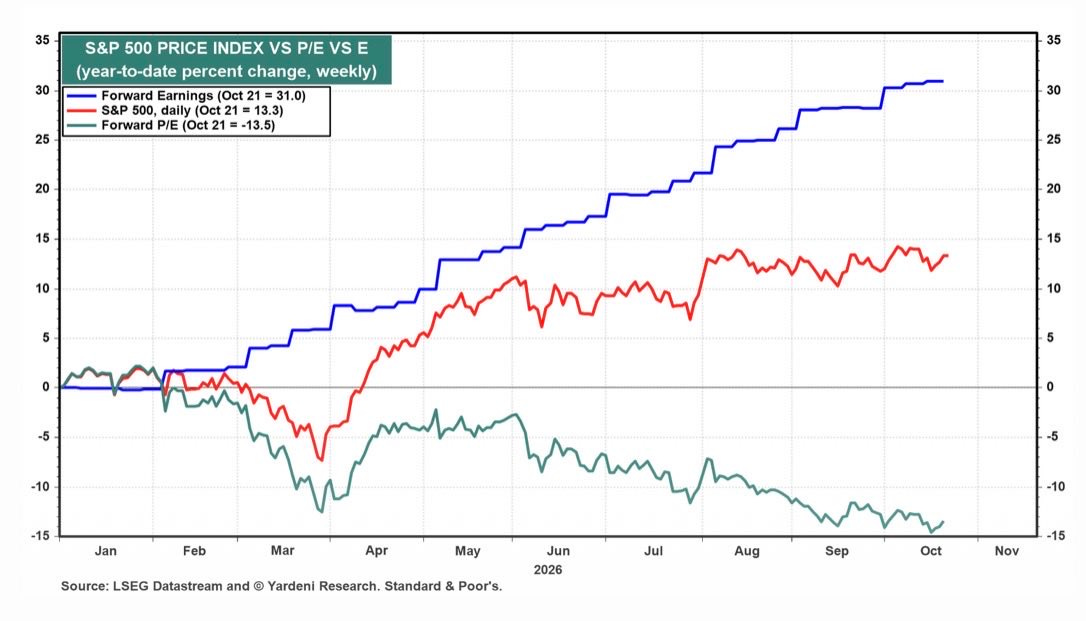
Valuations keep improving as earnings expectations run into investor disbelief. Source: Yardeni Research, via Sam Ro
AI faces a high bar
The coming reports from Alphabet, Amazon, and Microsoft will be critical for market momentum next week. Investors will be looking for continued progress in AI adoption and cloud services, alongside fresh guidance on capital expenditures. More proposed spending could underwrite confidence in long-term demand, but it could also undermine the idea that the hyperscalers will even be satisfied to cap their spending. The reaction to Meta’s earnings report shows that simply promising to invest more is no longer enough to win over the market.
Higher investment could support future growth, but it also raises questions about financing costs, profitability, and the time required to earn an adequate return. Across the technology sector, investors increasingly want evidence that AI spending is translating into durable revenue and earnings growth.
Investors are becoming impatient and skeptical. After successive quarters of astronomical growth and rising expectations, the bar for success may now be too high to clear. We’ll know for sure in a few weeks, but this may be the quarter when even the best results are simply not good enough.
Inflation, inflation everywhere
Recent economic data paints the kind of muddy picture you might imagine a five-year-old could paint. A modern art curator might call it brilliant, but Rembrandt, this is not.
U.S. business activity continued expanding at a solid pace in October, with the S&P Global Composite PMI at 57.6, down from 58.4 in September. Manufacturing and services remained strong, although businesses reported their sharpest increase in selling prices since August 2022.
Housing remains a definitive trouble spot and is still likely to get worse. Builder confidence fell to its lowest level since 2012, while pending home sales plunged 7.3% in September to their lowest reading since the series began in 2001. Elevated mortgage rates and rising construction costs continue to weigh on affordability and demand.
Initial jobless claims fell to 194,000, offering a surprisingly sunny view about the labor market. The experience on the ground, however, is dismal. Both the data and job seekers’ experiences point to stagnant hiring and low bargaining power. Real wage growth is negative in most states.
Oil prices turned higher late in the week as Middle East tensions flared again. Rising energy costs could reinforce inflation pressures just as investors prepare for the Federal Reserve’s next decision. The combination of persistent inflation and elevated borrowing costs is having an uneven impact on businesses. Small businesses and consumers are hit the hardest, while larger businesses are less likely to be constrained.
What this means for investors and what’s next
Oil prices and geopolitical developments remain immediate risks that aren’t predictable and could affect the market positively or negatively (maybe both).
The Federal Reserve meeting (Tuesday & Wednesday) and the October personal consumption expenditures report (Thursday) will dominate next week’s economic calendar.
Earnings from Alphabet, Amazon, and Microsoft will have the most direct impact on the market direction. It will be hard to separate the impact of inflation, Fed commentary, Treasury yields, or AI spending guidance as we hit mid-week. All three will be pulling their respective strings to make the market dance.
I am still optimistic about stocks, even with the recent bumps. Improving market breadth, while it helps dull the technology sell-off, is no substitute for diversification or proper risk management. Investors need to avoid excessive concentration in individual stocks, technology, or growth-oriented strategies for the time being. It’s not time to shoot from the hip on either rash buying or selling.
Related: Investors Play Defense as Chip Stocks Plunge 12% and Inflation Reheats