


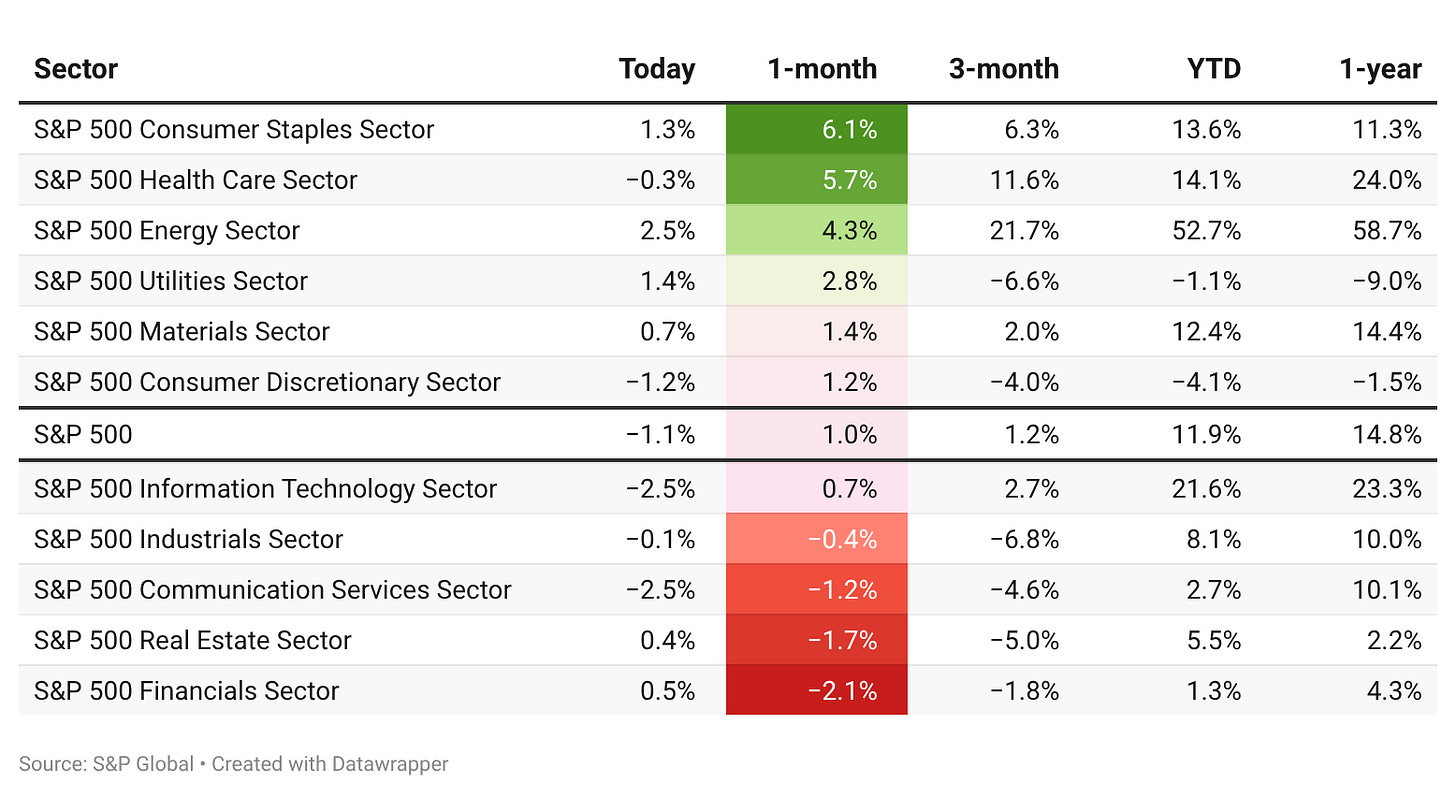
Investors are playing defense Markets had plenty of news to digest this week, and investors responded by moving away from technology stocks and toward more defensive areas of the market. Many of the lingering issues we’ve been talking about all year started to come to the forefront. Nothing is new, but it seems to be sinking in all at once.
Concerns about AI spending and financing, hotter-than-expected inflation, and rising oil prices weighed on equities. Thanks in part to the exodus from Technology and other riskier assets, increased demand for government bonds pushed Treasury yields lower. The result by Friday’s close was a sharp divergence between growth and value stocks.
The Dow Jones Industrial Average gained 0.67% while the rest of the indices suffered. The S&P 500 fell 1.95%, the Russell 2000 dropped 3.05%, and Nasdaq fell 4.48%.
The Russell 1000 Value Index outperformed its growth counterpart by more than 5.5 percentage points, underscoring just how quickly market leadership has shifted. Energy stocks benefited from rising oil prices, while defensive sectors attracted interest as investors reassessed risk. Technology, which remains one of the year’s strongest-performing sectors, has become a source of uncertainty rather than the reliable market engine a month ago.
The broader economic picture is stubbornly encouraging and doesn’t reflect the tumult recent market action would suggest. Corporate earnings expectations are strong, consumer spending has held up, and economic activity continues to expand.
With inflation accelerating and questions emerging about the returns on AI investment, investors have plenty of reasons to demand evidence before paying premium prices for future growth. And the disbelief is showing in current valuations.
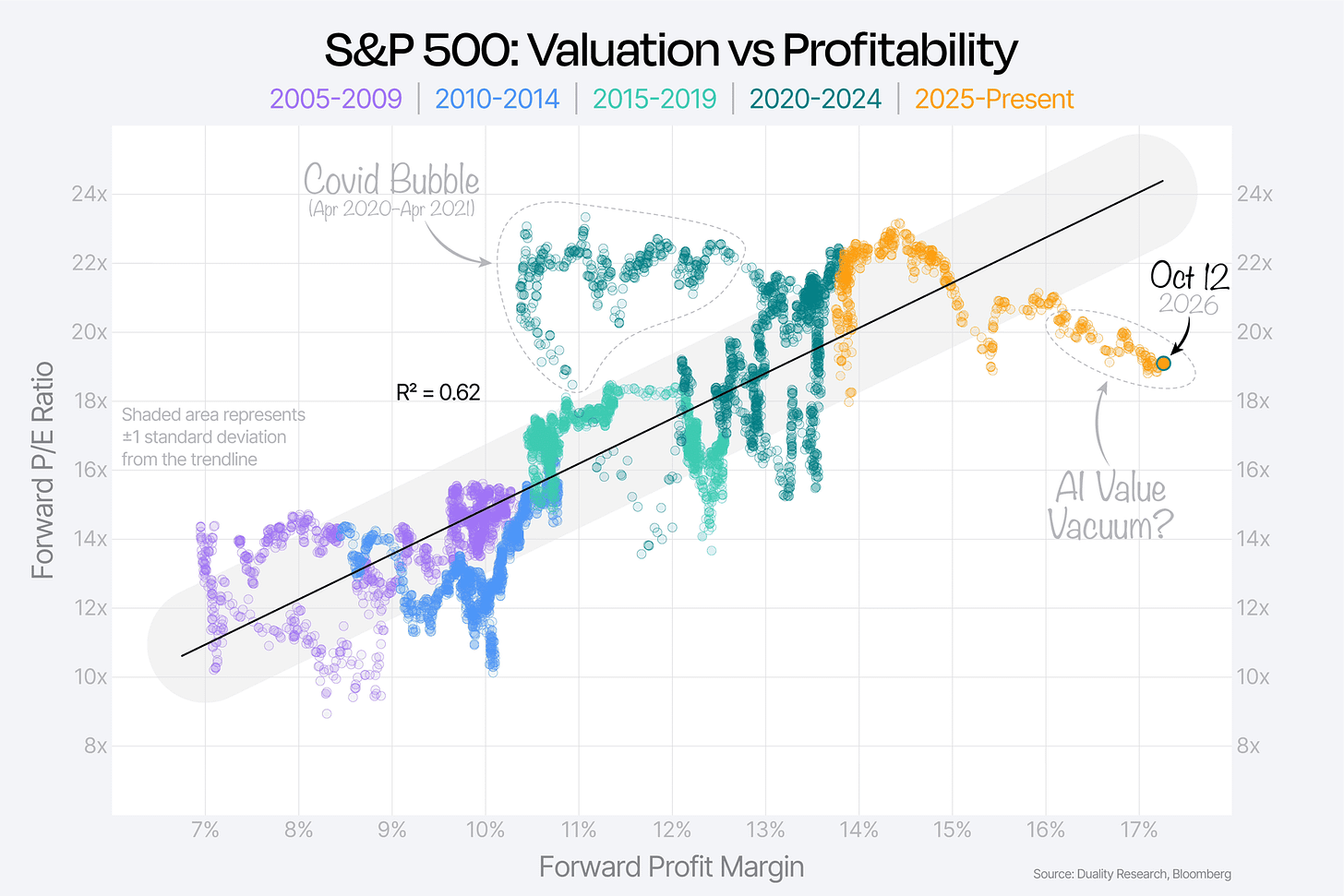
Source: Duality Research
Inflation is reheating
September’s inflation reports delivered an unwelcome surprise. Consumer prices rose 3.7% from a year earlier, above the 3.6% forecast, while core inflation accelerated to 2.6%. Gasoline prices jumped 9.1% during the month, accounting for more than half of the increase in headline CPI.
Producer prices were even more concerning, rising 6.3% year-over-year against expectations of a 5.4% annual increase. It was the largest annual increase since December 2022.
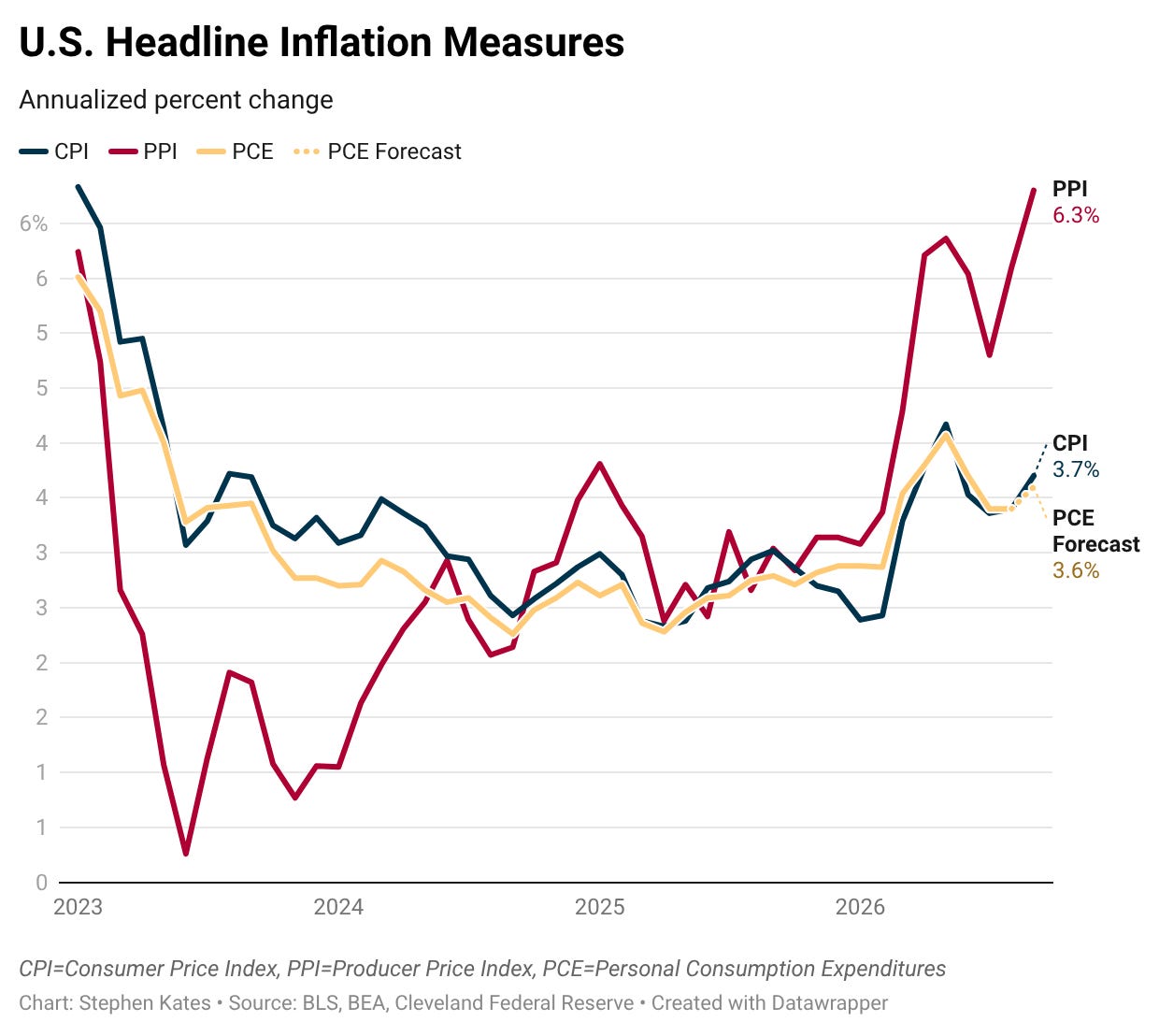
Higher energy costs will make the inflation problem harder to contain. With oil prices rising amid escalating Middle East tensions, more expensive fuel could eventually feed into transportation costs and the prices consumers pay for goods. That creates a difficult backdrop for the Federal Reserve, particularly if inflation remains elevated while economic growth holds up.
Despite this, Treasury yields did move lower, with the 10-year yield falling to approximately 5.09% from 5.24% the previous week. The decline suggests investors sought the relative safety of government bonds as technology stocks sold off, despite the inflation surprises. This is good news but could easily reverse when investors feel ready for risk again.
Falling yields will support stock valuations most effectively when they are caused by falling inflation, more geopolitical certainty, and lower debt levels. Those aren’t the reasons yields fell. Instead, they reflect fear rather than improving inflation prospects, which makes the signal less reassuring.
Turning to the consumer: Households are still out there spending, although the details warrant attention. Retail sales rose 0.8% in September, beating forecasts, but sales excluding several volatile categories, including gasoline, increased just 0.1%. Additionally, revisions by the Census Bureau showed that the inflation-adjusted sales are much worse than previously thought. Real spending is far from the levels it was at prior to the 2022 inflation.
The labor market is largely in a steady pattern and hasn’t been a primary factor for the market or the Fed in months. Initial jobless claims remained below 200,000 for a fifth consecutive week, underscoring how low layoffs continue to be. The economy has not shown signs of breaking down, but if layoffs were to grow, it could add further stress to overextended household spending.
The only AI test that matters
The week’s sharpest selling pressure centered squarely on AI-ecosystem stocks. Concerns about financing costs, lofty growth expectations, and the potential returns on massive infrastructure investments hit semiconductor and memory companies right between the eyes. Reports questioning the pace of AI revenue growth added to the unease, while developments involving competing memory technology raised questions about future supply and pricing.
I’ve been covering the ups and downs nightly in my Reading the Market posts. If you haven’t checked those out, you can see a free preview of Tuesday’s edition below. If you like the work and analysis I do, I welcome your support.
The PHLX Semiconductor Index endured a 12% weekly decline and Friday marked its eighth consecutive down session. Credit concerns surrounding CoreWeave were one of the major factors that spread to other industry names. There is a distinct gap developing between larger and smaller AI cloud names, with the smaller ones loaded up with debt suffering considerably more as borrowing costs impact them more acutely.
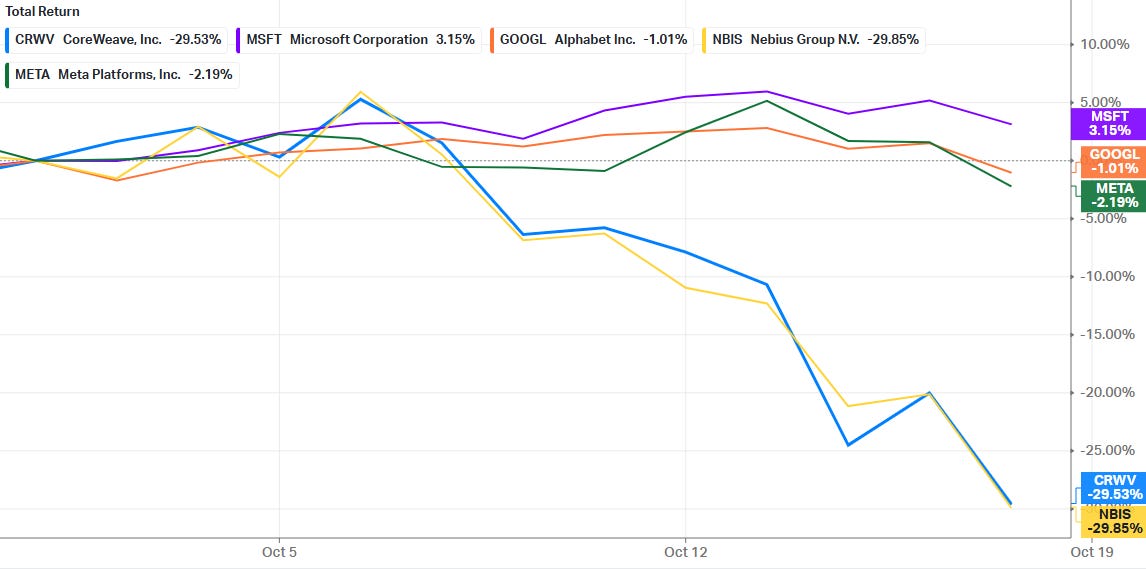
Coreweave’s 2031 debt hit 16% yields this week as investors dumped it, highlighting how heavily some parts of the AI boom depend on borrowing to fund expansion. Coreweave is hardly the only company on the knife’s edge, but it is a poster child for how much inherent risk is baked into these AI infrastructure companies when or if demand falters.
Even encouraging words from Jensen Huang on Thursday weren’t enough to stem the bleeding. Jensen bought the stock a brief recovery that day, but it fell another 11% by the Friday close, capping a -25% week.
As much of a behemoth as technology is in the U.S. markets, a difficult week for the sector does not automatically signal the end of the broader bull market. Earnings growth remains a meaningful support, with third-quarter estimates calling for roughly 29% growth among all S&P 500 companies (tech remains the lion’s share).
Early results have also been encouraging, although the number of companies reporting remains too small to draw firm conclusions. Economic activity continues to expand, and September retail sales suggest consumers have not abandoned spending despite persistent inflation.
What’s Next? Earnings, the Fed, and Oil
Upcoming earnings reports will offer investors a better opportunity to put these companies to judgment. Until then, volatility may remain elevated, particularly for stocks whose valuations depend heavily on expectations of future growth. The VIX turned out to be one of the best performers of the week.
Next week, investors will look for further earnings results and updates on AI investment and revenue growth. The October 28 Federal Reserve decision will be another key test, with inflation trends and the outlook for interest rates likely to shape market expectations. For the moment, odds of a hike haven’t budged, but surprises from this Fed aren’t off the table.
Oil prices and Treasury yields deserve close attention, while the S&P 500’s support around 7,600 and the semiconductor index’s 11,000 level are important technical markers to watch. The week’s rotation reinforces the value of diversification. Strong earnings and resilient growth remain encouraging, but concentrated exposure to a single market theme can make a portfolio vulnerable when sentiment changes quickly. This won’t be the last time.
Related: S&P 500 Up 117% in 4 Years. Can the Bull Market Make It to 5?