


A year of Age Against the Machine taught me that planning isn’t the point, independence is overrated, and the clock isn’t the only thing running out.
When I started Age Against the Machine a year ago, I thought I knew what I was getting into.
I’d spent decades as a financial advisor working with people who were getting older, retiring, and either thriving or failing to thrive.
I’d seen more than my share of cautionary tales, and I wanted to write about people who refuse to plan because planning means acknowledging things they don’t want to think about. People who had plenty of money but very little idea what they wanted their money—or their remaining time—to be for. And families forced to make decisions nobody had wanted to discuss when there was still time to discuss them.
Gratefully, I had also seen the best versions of closing out lives well lived. Folks who planned early, adapted when circumstances changed, talked openly with their families and seemed to understand that getting older required occasionally admitting that the person they were at 75 wasn’t the person they had been at 55.
I thought I was well-prepared as a first-time aspiring writer and I put out my first Age Against the Machine post a year ago. I soon discovered writing has an annoying way of exposing the difference between something you understand professionally and something you actually believe.
It was professional muscle memory for me to tell a 72-year-old client that waiting another five years to make a difficult decision might reduce her options. It was new ground to look at the decisions I was postponing. It was routine to tell someone that retirement requires more than money and deep reflection about the identity you carry forward. It was materially harder to ask myself who I was without my work as an advisor.
Somewhere during the first year of AATM, aging and its inevitable transitions stopped being subjects I was writing about and became something more personal. Every article became a different prism to view myself through.
Once I found myself inside the problems and solutions that I was writing about, some of the things I thought about aging started to change. I began AATM thinking the goal was to help people plan for the future with (I hope) a somewhat different voice than what I’ve seen out there. I’ve ended the year thinking that’s not quite right.
We can’t prepare for every future. There is too much that happens that we don’t choose and can’t control, planning be damned. Maybe the more useful goal is to help people preserve their ability to choose when that future arrives.
Which brings me to a guy that I’ve spent a surprising amount of time thinking about this year. Me. Just older.
Future Tom is kind of an asshole
One of the first ideas I became obsessed with was my Future Self. What would 75-year-old Tom think about the decisions 55-year-old Tom was making? Would he appreciate me, or want to come back and punch me in the face? I suspected the latter.
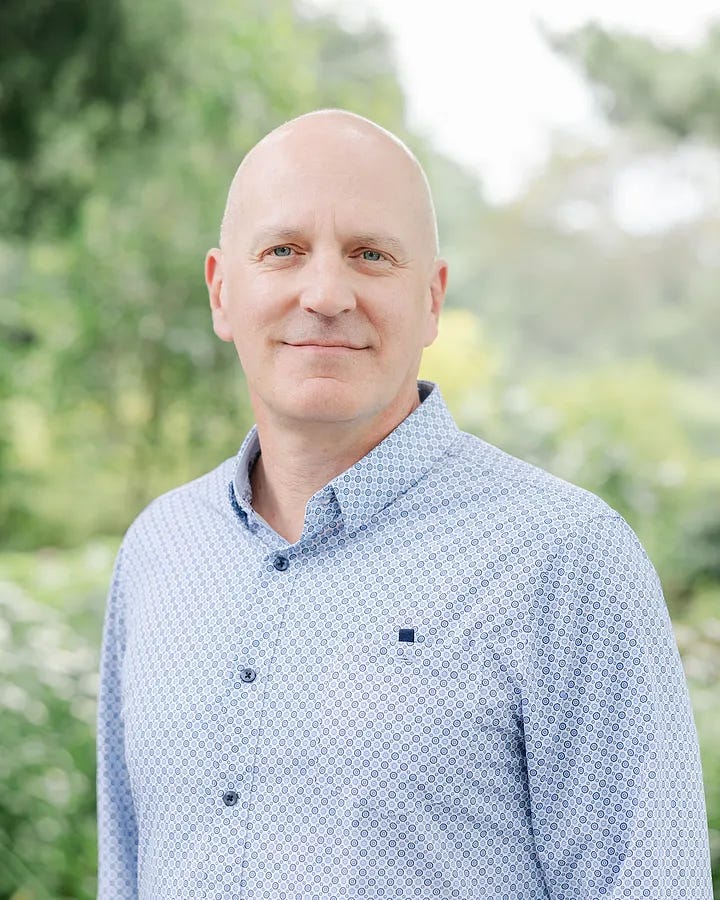
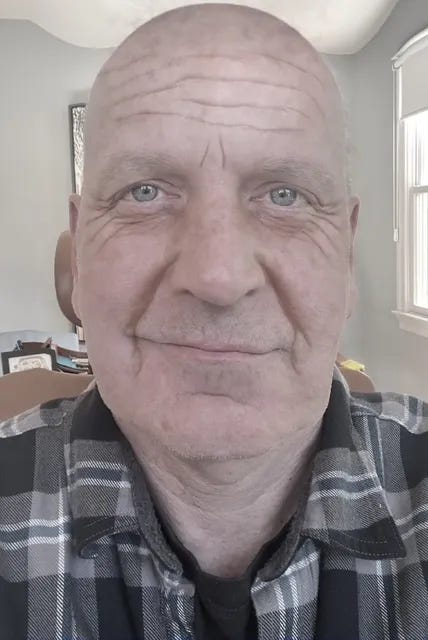
Me a year ago and insufferable future-me, according to the Aging Booth App
Writing about Future Tom felt like another planning exercise — applied versions of deferred gratification. But the more I thought about it, the more complicated it became.
I could theoretically make Future Tom financially safer by taking it easy on spending, protecting his body by avoiding anything dangerous, optimizing every meal, workout, and hour of sleep in pursuit of longevity. I could become the healthiest, wealthiest, most insufferable 95-year-old in America.
I asked myself, though, what’s the point? Over the past year, I’ve realized that what I really want to give Future Tom isn’t perfection.
It’s options.
I want him to have enough health to choose what he wants to do and enough money to decide how he wants to live. I want him surrounded by people rather than navigating everything alone. Most of all, I want him to retain the ability to change course when life inevitably ignores whatever plan I’ve made for him.
**Time isn’t the only scarce resource. Options are. **And options have expiration dates.
Waiting is a decision
That realization led me to something I called ProcrastinAging. I explored the dangerous mash-up of procrastinating choices as we get older. A number of posts orbited that idea over the past year, like Anticipating Future Regret and The Regret Tracker.
Knowledge isn’t the problem. We tell ourselves we’ll deal with something later because there isn’t a crisis today. AATM posted quite a bit about cautionary tales I see professionally. You can delay moving until moving is no longer your decision. Difficult conversations can be avoided until circumstances have the conversation for you. Options exist only until your body or mind or circumstances quietly remove them from the menu.
Nobody wakes up and says, “Today I’m going to surrender some of my future autonomy.” We just wait. And waiting surrenders that autonomy for us. I did expect that theme to land when I started writing. But……
Am I taking any of my own advice?
Spend a year writing about Future You, procrastination, regret, identity, and the shrinking window for certain decisions, and eventually you have to confront yourself.
Apparently I decided I should take my own advice. Over the past year, I made some pretty significant changes that I hadn’t anticipated when I started AATM.
After reaching some milestones I’d been working toward for years, I sold my wealth management practice and moved into more of a managing and mentoring role. That was a bigger change than the transaction itself. I’d spent decades building a practice, serving clients, and being the person responsible for the relationships. Stepping away from that role meant giving up a piece of an identity I’d spent much of my adult life building.
It also created room for something else.
I started a new company, Healthspan Wealth, which will formally launch next month. Was that the safe thing to do at this point in my career? Probably not. But writing so much about future regret had gotten into my head. I kept thinking about how I’d feel years from now if I had an idea I believed in, had the opportunity to pursue it, and didn’t because staying where I was felt more comfortable.
Future Tom again. That asshole. So I took the chance. And I realized that I didn’t want to do any of this alone.
We’re all in this together
When I started writing, I imagined Writer Tom as a solitary, independent exercise. I would research things all by myself, think about them, write them down, and send them into the world. It hasn’t worked out that way.
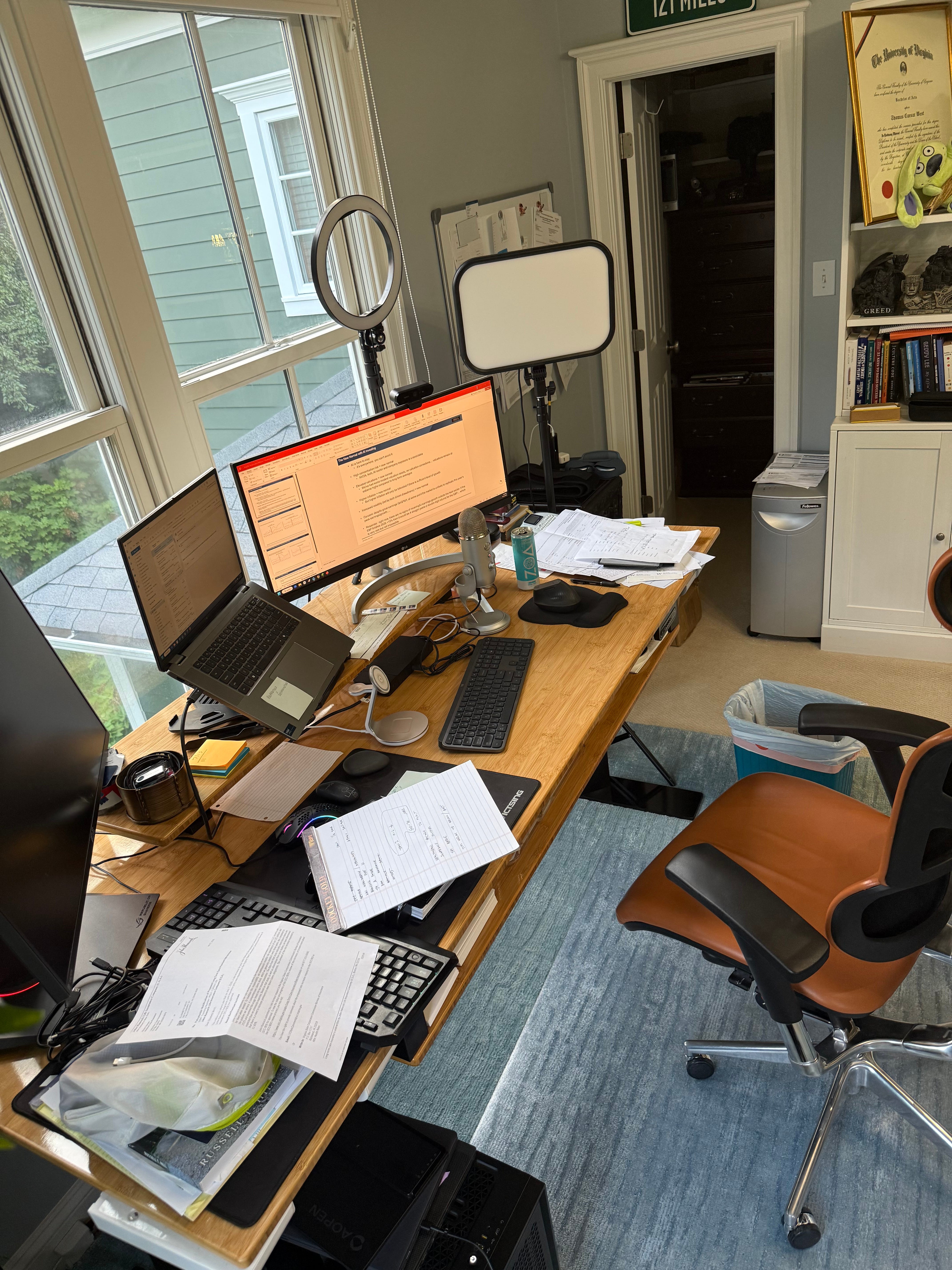
I thought this was where I was gonna do everything alone — just me and some very flattering lighting.
I recruited Nuria Sheehan, who teaches Digital Publishing at DePaul University, to help organize my thinking and manage AATM operationally. Then I recruited my childhood best friend, Brandon Trissler, as a copy editor, partly because I trust his judgment and partly to make sure these essays occasionally sound like they were written by someone with a working knowledge of the English language. What began as my project started becoming our project. I’m proud of our little three-person AATM community and the work we’ve done. Thanks to you both. Maybe in Year Two we make the AATM fun bunch a little bigger with a podcast effort.
That experience has changed the way I think about something else we tend to prize as we get older: independence. Ask almost anyone how they want to age, and you’ll hear some version of not wanting to be a burden and staying independent.
I understand the instinct. I share it. Future Tom does not want a committee meeting every time he decides to go to lunch. But I’m increasingly convinced independence is the wrong goal. Because none of us are actually indefinitely independent. We’re just periodically healthy and wealthy and competent enough to pretend we are.
AATM writer Tom figured this out almost immediately. I built a mini-AATM network around myself just like my client Ellie, who was aging alone. She understood that aging alone didn’t mean doing everything alone. She didn’t confuse needing other people with failing.
Writing about solo agers and broader AATM topics has evolved my thinking around independence to something better: intentional interdependence.
Know who your people are. Know what you might eventually need from them, now and down the road. Don’t forget what they might need from you. Have those conversations before everybody is sitting in an emergency room at 2:00 a.m. And for God’s sake, make sure somebody knows where the passwords are.
We spend much of adulthood proving we can take care of ourselves. Then, if we’re paying attention, we discover that doing everything ourselves was never really the point.
Other people can make us better. They can catch our blind spots, help us through the things we can’t control, and occasionally push us toward the things we’re afraid to try.
We’re not in this alone. We’re in it together.
I’m beginning to think that’s not a concession we make as we age. It’s one of the advantages.
I know less than I did a year ago
That’s probably the most surprising thing I’ve learned. I started AATM thinking I might provide some answers about aging. A year later, I’m less interested in answers.
We’re drowning in answers: from Google, from AI, from countless wellness soothsayers preaching about monitoring my biomarkers, optimizing my mitochondria, sleeping perfectly, and spending sufficient time submerged in freezing water. Death may eventually decide I’m too annoying to bother with.
Instead, I’m increasingly interested in questions.
- What am I postponing because dealing with it would force me to acknowledge that I’m getting older?
- Who are my people?
- Who am I if I stop doing the thing that has defined me for decades?
- What am I doing for Future Tom—and what am I unnecessarily sacrificing on his behalf?
Those aren’t questions a financial plan can completely answer—or ones this financial advisor can easily answer for himself.
I’ve learned in the last year that I’m less interested in “winning” aging than I was a year ago. I don’t even know what that means anymore.
Living to 100? Dying with the most money? Having the biological age of a boy band member?
Eventually the machine wins: Our bodies and abilities change. Circumstances arrive that we didn’t choose and can’t optimize away. And no matter how much we optimize, we and the people we love die.
The real question is what we do inside those constraints. A year ago, I thought aging was mostly about preparing for what might happen. Now I think even more it’s about preserving agency within whatever does happen.
Reality without resignation. Optimism without delusion.
Maybe that’s what Age Against the Machine has become for me. I’m 56 now. I can still work at something that matters to me. I can travel. I can change my mind. I can make mistakes and, most of the time, recover from them. I can even order my own smoothie.
For now. In other words, I still have a hell of a lot of options. Maybe the most important thing I learned in Year One for myself isn’t how to age well. It’s to stop acting as though the choices I have today will always be available tomorrow.
Related: Why So Many Successful Men Lose Their Identity in Retirement
