


AI’s growing pains become a market-wide problem
The market’s AI-led sell-off deepened this week, now pushing major U.S. equity benchmarks into correction territory. Questions about the sustainability of the technology investment boom are giving rise to more fearful reactions as few asset classes are left unscathed.
The S&P 500 fell 8.6%, its worst weekly performance since April 2025, while the Nasdaq Composite dropped a full 10%. The S&P MidCap 400 declined 7.0%, indicating this is an equal opportunity selloff that is extending well beyond the largest technology companies.
All 11 S&P 500 sectors finished lower for the week. Technology and communication services led the declines and punctuated the difficult week with 7% and 3% losses on Friday, respectively. Consumer staples and utilities held up best but were hardly safe havens.
AI infrastructure spending has grown into a vital part of the economy and has crowded out other industries. The AI buildout has been the primary driver of capital investment, corporate earnings, and market performance. Concerns over broadening market and economic contagion from tumbling confidence in AI are contributing to the flight toward safety.
A sharp slowdown could have consequences outside of the stock market and impact the real economy, particularly if falling equity prices weigh on consumer confidence and spending. The International Monetary Fund estimated back in October that a rapid unwind of AI investment could reduce global GDP growth by 1.1 percentage points by 2028. In the US, where AI is a far larger concentration, it could be 1.8 percentage points.
The scale and acceleration of this month’s decline reflect a dramatic shift in investor sentiment. Strong Q3 corporate earnings and continued demand for AI computing have not eased concerns about the cost of financing the industry’s expansion or the timing of future returns. The election, rather than offering clarity about the future, raised the specter of potential for tighter regulation and harsher data center building conditions.
You vs. the quarter she told you not to worry about
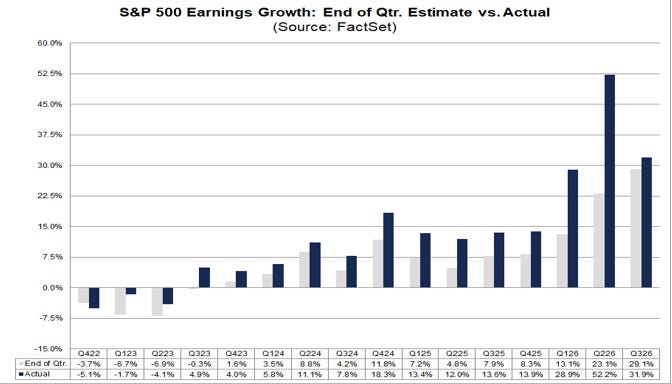
Year-over-year growth in Q3 paled in comparison to that of Q2. The upside earnings surprise, while still positive, was a paltry 3.1%, the worst since Q4 2022 and less than half the average over the past 15 years.
A resilient economy puts the Fed’s focus elsewhere
The economic data currently offers a much more encouraging picture than the equity market, with one major exception: housing.
October retail sales increased 0.2%, while the control group rose a stronger-than-expected 0.6%, suggesting that consumer spending continues to support growth. Consumer sentiment also improved in November, and expectations for inflation over the next year fell to 3.7%.
GDP growth continues to show strength, with the first preliminary Q3 reading landing at 3.4%. This marked a large step-up from Q2’s 2.2% growth. The second Q3 estimate from the Bureau of Economic Analysis will come out on Wednesday, November 25th.
Housing remains a consistent weak spot, with builder confidence at a 14-year low and pending and existing home sales falling more than expected. High mortgage rates, stubborn home prices, and tepid wage increases have left buyers on the sidelines.
Amongst all this, the Federal Reserve remains focused on bringing inflation back toward its 2% target. Minutes from the October meeting showed broad support for further rate increases, and several officials maintained a particularly hawkish tone during public comments during the week.
A 25-basis-point increase in December remains the most likely outcome, especially as the market slide steepens. The odds of a 50-basis-point hike peaked at 14% at the end of last week and have been all but erased since then.
Treasury yields fell across the curve as investors sought safety, with the 10-year yield declining roughly 14 basis points to 4.91%. The combination of falling yields and expectations for further rate increases reflects a market increasingly concerned about the economic consequences of tighter financial conditions. The Fed may be watching the risks posed by market volatility, but with core PCE inflation still above 3%, the threshold for a Fed put is far away.
Looking beyond the correction
The current selloff has been driven primarily by a reset in valuations and expectations, rather than a collapse in corporate earnings or consumer demand. While inflation and high borrowing costs are threats to corporate valuations, they are not yet hurting earnings expectations. For the time being, consumer sentiment has been showing slight improvement.
S&P 500 earnings are on pace to grow more than 30% this year, with analysts expecting another 16% increase in 2027. The index’s forward price-to-earnings ratio has fallen to approximately 18x, below the 10-year average of roughly 19x.
This hardly rules out further market declines from here or again in the future, but these valuations do suggest that the longer-term investment picture remains constructive. While prices deviate from the path of earnings, and sometimes deviate widely, over the long term they snap back in line.
AI adoption is still in its early stages, and the investment already underway makes it unlikely there will be an abrupt end to the infrastructure buildout. However, a more gradual pace of spending is appearing more likely. This could even be healthy and allow revenues and productivity gains to catch up with the industry’s bewildering financial commitments.
For investors, it is challenging to distinguish between a temporary reset in market expectations and a more lasting change in the economic outlook. Diversification and asset rebalancing remain especially important, particularly for portfolios heavily concentrated in technology and growth stocks. This is what risk looks like, and you can’t stick your head in the sand.
This period of pain doesn’t dissuade me whatsoever from continuing to favor U.S. large-cap and mid-cap stocks. Falling prices are offering some unique opportunities to scoop up the broad indices as well as select companies that are getting swept up in the selling.
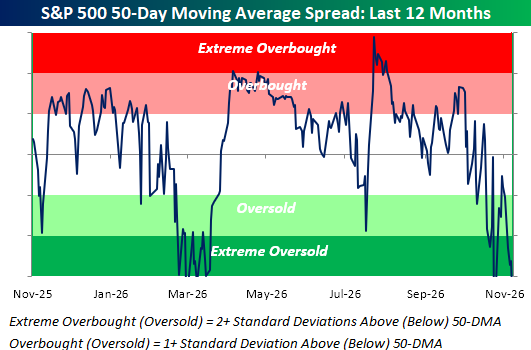
Oversold technical conditions increase the possibility of a short-term rebound, but further selling could prolong the correction. Investors should remain focused on their risk management and long-term goals rather than trying to predict the exact market bottom.
Source: Bespoke
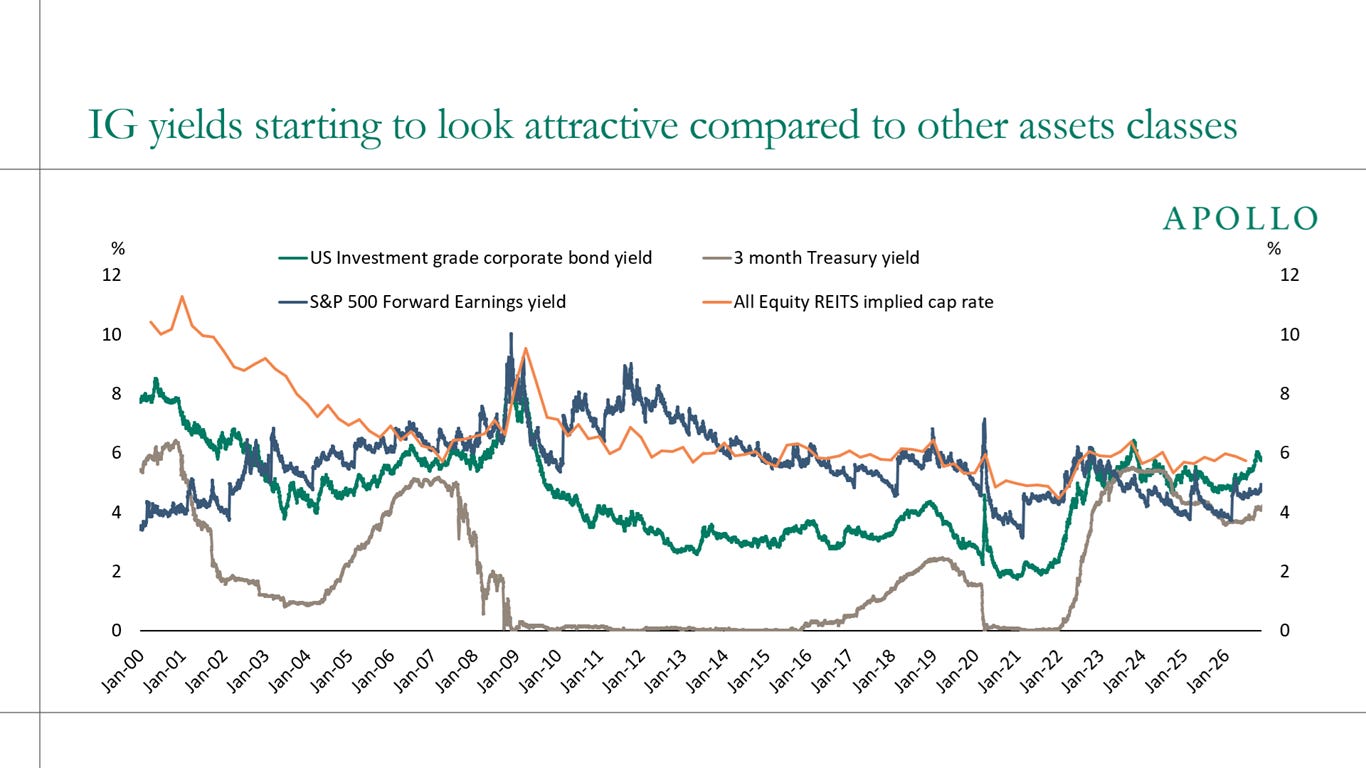
Short-term Treasury securities offer attractive income, and with a likely hike on the way, they should improve. Investment-grade and high-yield bonds are appealing for their income and diversification benefits while stocks work through this crisis of confidence.
Source: Apollo
Coming up next
The Thanksgiving holiday will shorten the week, but there are still interesting reports ahead, including Personal Consumption Expenditures (PCE), the second Q3 GDP estimate, and more earnings releases (HPE, DELL, ADSK, DLTR, DE, & more). If the market continues to slide, we can at least be thankful for fewer trading days and juicier stock-picking opportunities.
Looking further into December, the key questions are whether the Fed will raise rates 25 or 50 basis points, whether AI investment expectations stabilize, and whether the recent market weakness begins to affect consumer and business confidence.
Related: Why the S&P 500 Rallied Despite Nvidia’s 13% Plunge