


The stock market endured a volatile week as investors shifted from election-related optimism back to growing concerns about the next phase of the AI investment cycle. Democrats’ decisive midterm election victories initially sparked a relief rally as political and legislative certainty set in.
However, optimism faded within 24 hours as questions about data-center development, regulation, and financing sparked minor market panic.
The Nasdaq suffered the steepest weekly losses (-3.4%), while the Dow Jones Industrial Average showed relative resilience but still finished lower (-0.94%). Friday’s rebound in semiconductor stocks offered some relief, although it recovered only a fraction of Thursday’s historic losses.
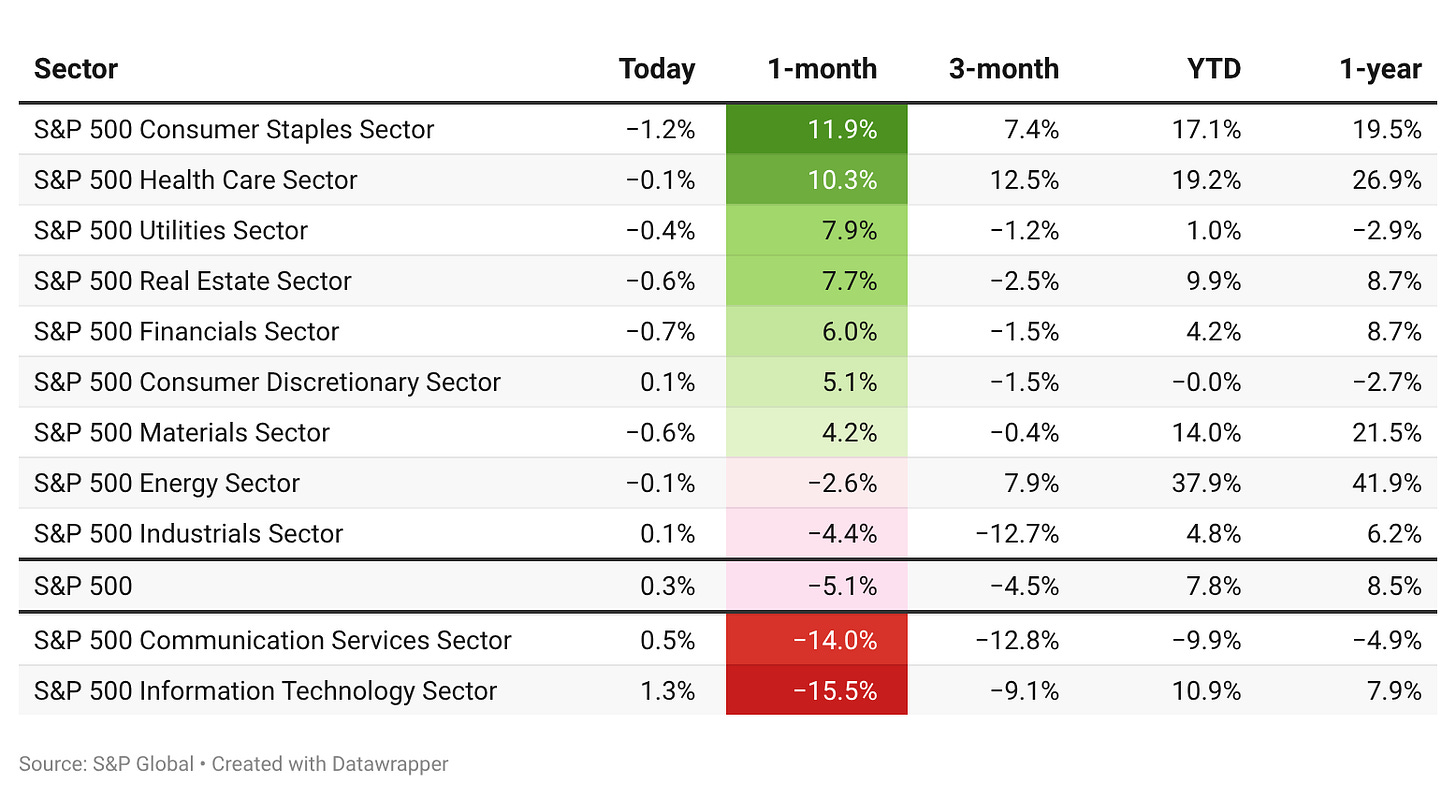
The S&P 500 closed the week -2.7%, while its equal-weight counterpart ended much more favorably, but still lower on the week (-0.73%). The one-month performance of the market is starkly divided between sectors tied to the AI trade and those that aren’t.
Election relief turns to disbelief
Markets initially welcomed the election results, viewing the benefits of a divided government positively. While gridlock might seem bad for reforming the country, it can be an excellent environment for the market to thrive. Neither party has a clear path to either greater deficit spending or further tax cuts, as each party constrains the other’s worst impulses.
Additionally, there is now a greater chance of repealing tariffs and making progress toward resolving the Iran war. Both of which would help bring down inflation. The belief that the Democratically controlled Congress will find a solution sent oil prices falling more than 8% on Wednesday.
Unfortunately, the collective positivity was short-lived, at least for investors. Thursday turned into the sharpest single-day drop since April 2025 (Tariff Tantrum). Investors reexamined the implications for technology companies and the broader AI investment cycle and didn’t like what they saw.
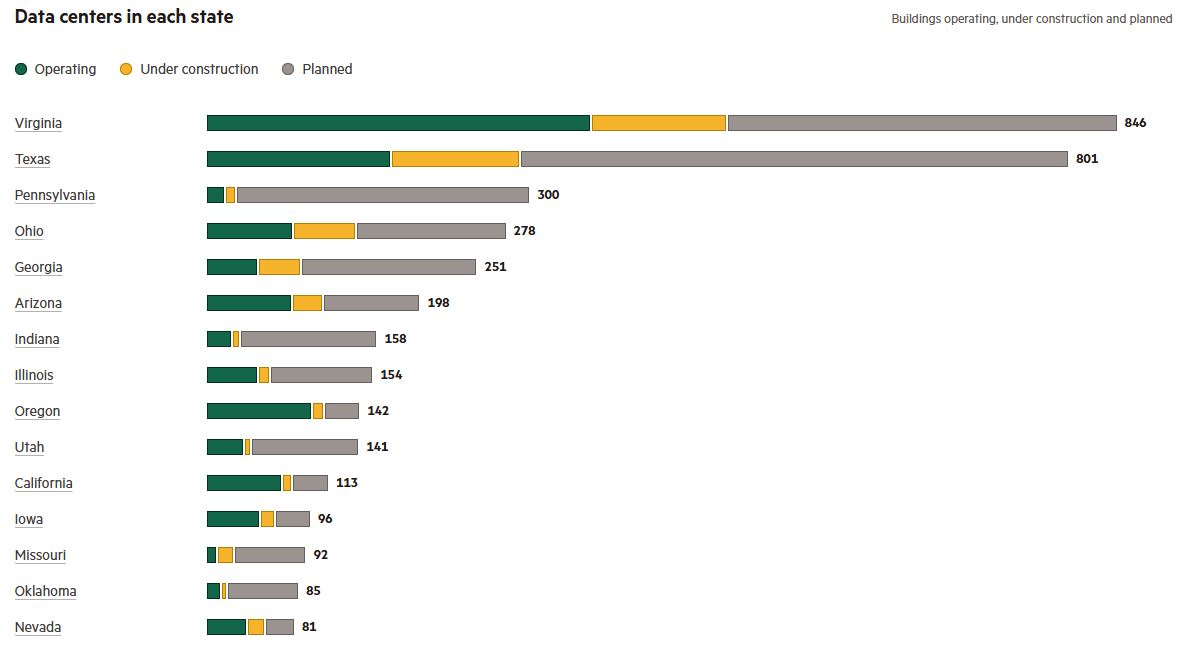
Concerns about tighter state and local oversight of data-center construction, particularly around permitting, electricity, and environmental requirements, added to the already stifling debate over the sustainability of AI capital spending. The AI infrastructure buildout has been a major economic growth engine for the country, and the implication that it could be kneecapped is a legitimate concern.
“The election sweep by Democrats raised concerns about additional regulatory scrutiny and potential restrictions on data center construction, particularly as local opposition grows in states like Texas, where there was a heavy concentration of projects already planned. Just like in other policy-driven panics like the Tariff Tantrum in April 2025, investors are selling first and asking questions later.”
Source: Cleanview
Thursday’s selling was particularly severe, with the Nasdaq 100 falling 6.4% and the Philadelphia Semiconductor Index plunging more than 12%, marking their worst sessions since March 2020. Friday earned a partial recovery, led by semiconductor stocks and select technology companies, but participation weakened as the day went on and offers little hope of broad market support next week.
Growth stocks continued to weaken relative to value, while defensive sectors such as consumer staples and health care held up better during Thursday’s selloff even while succumbing to the selloff. Smaller-cap stocks held up relatively well on Friday, with the Russell 2000 and S&P Mid Cap 400 outperforming the large-cap indexes.
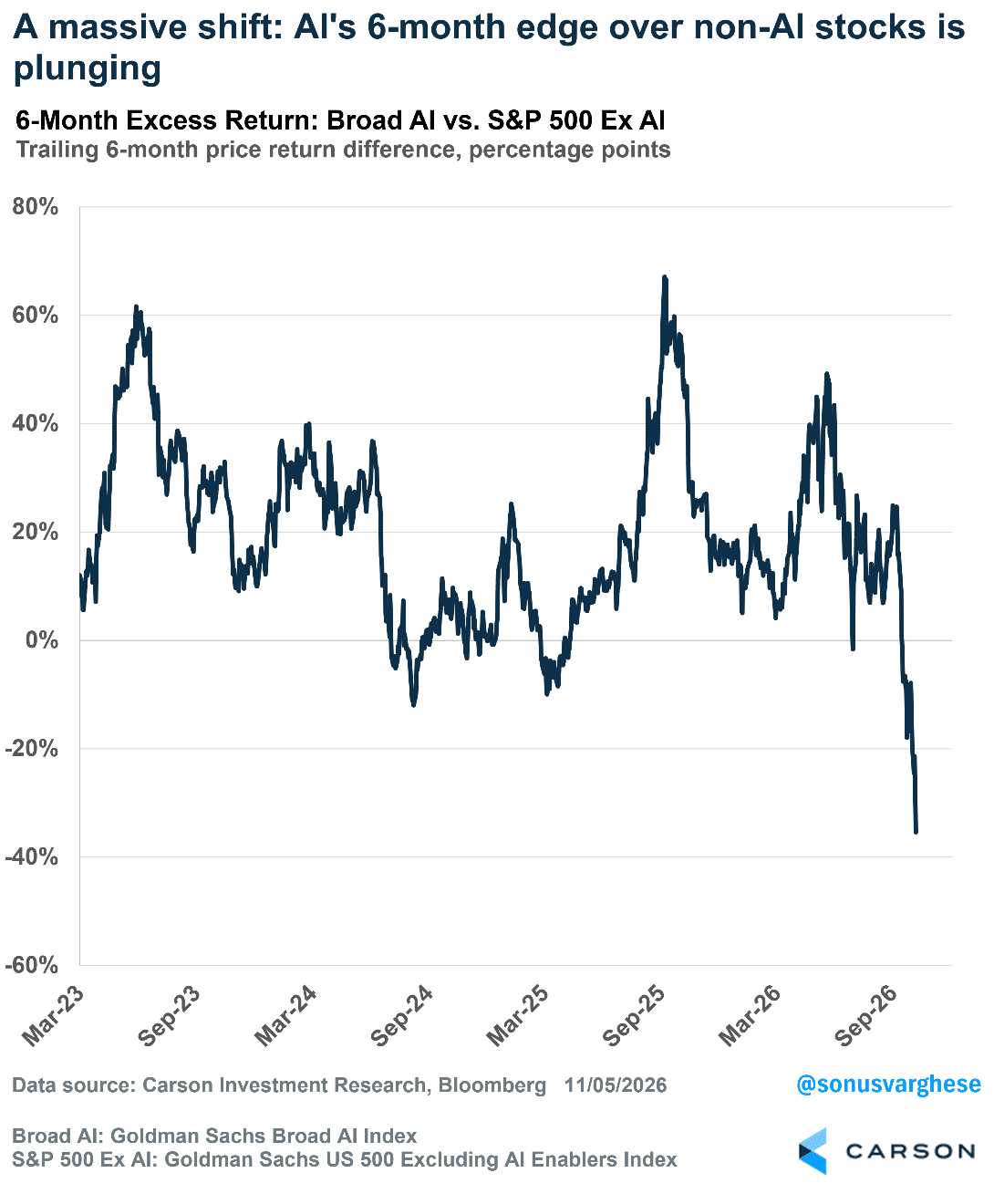
The division is even starker when a line is drawn between purely AI and non-AI stocks, as this chart from Carson Investment Research shows. AI has been a perpetual loser for multiple months.
Strength Complicates the Fed Outlook
We should all be hopeful that there continues to be truth in the sentiment that “the stock market is not the economy”, because the latter is cruising while the former is stumbling hard. Recent economic data points toward a resilient U.S. economy.
October payrolls increased by 165,000, comfortably exceeding expectations, while Upward revisions to August and September added another 84,000 combined. The unemployment rate edged down to 4.1%, and job openings (Tuesday’s JOLTS report) increased to 7.52M in September, suggesting that labor demand remains healthy.
Manufacturing activity also strengthened, with the ISM Manufacturing PMI rising to 55.5, its tenth consecutive month of expansion. Services activity remained firmly in expansion territory as well, although it fell slightly from September.
The strength in employment and manufacturing provides a positive signal for economic growth and corroborates the strong GDP data from last week. But it complicates the inflation and interest-rate policy outlook. A strong economy and tight labor market don’t mix well with the need for disinflation.
Federal Reserve commentary pushed the market-implied probability of a December rate hike to 79.1%. Treasury yields finished the week lower, with the 2-year yield settling at 4.51% and the 10-year yield falling to 4.86% despite a Friday pop after the employment report. The yield curve steepened, and Treasuries recorded their fifth consecutive weekly gain.
Trials and challenges
The technology selloff is starting to look less like a temporary adjustment in crowded positions. If AI is on the Hero’s Journey, this is the period of trials, challenges, and setbacks. After several years in which investors rewarded companies spending lavishly and committing deeply to the cause, investors are getting antsy for a demonstrable pathway to profits. Absent near-term profits, clear, measurable productivity gains would be welcomed.
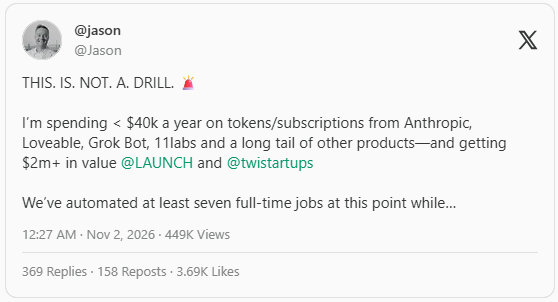
The anecdotes are everywhere, but the evidence of measurable institutional productivity improvements is hard to find.
Demand for computing capacity remains strong, but the financing requirements and uncertain timing of returns are becoming more important considerations. A slower pace of infrastructure spending could eventually make the cycle more sustainable by allowing profits to catch up with investment. The idea that the AI race is on a hamster wheel with no end in sight is eroding investor confidence that these trees can grow to the sky.
The cost of capital is already shifting, favoring established hyperscalers with existing capacity, strong balance sheets, and improving cash flow. Newer and weaker competitors and suppliers could be left in the cold after leading earlier this year.
The next phase of AI adoption could also create opportunities beyond technology, particularly in health care, financials, and industrials, where companies could still use AI to improve productivity and reduce costs. But that reality could be years away still.
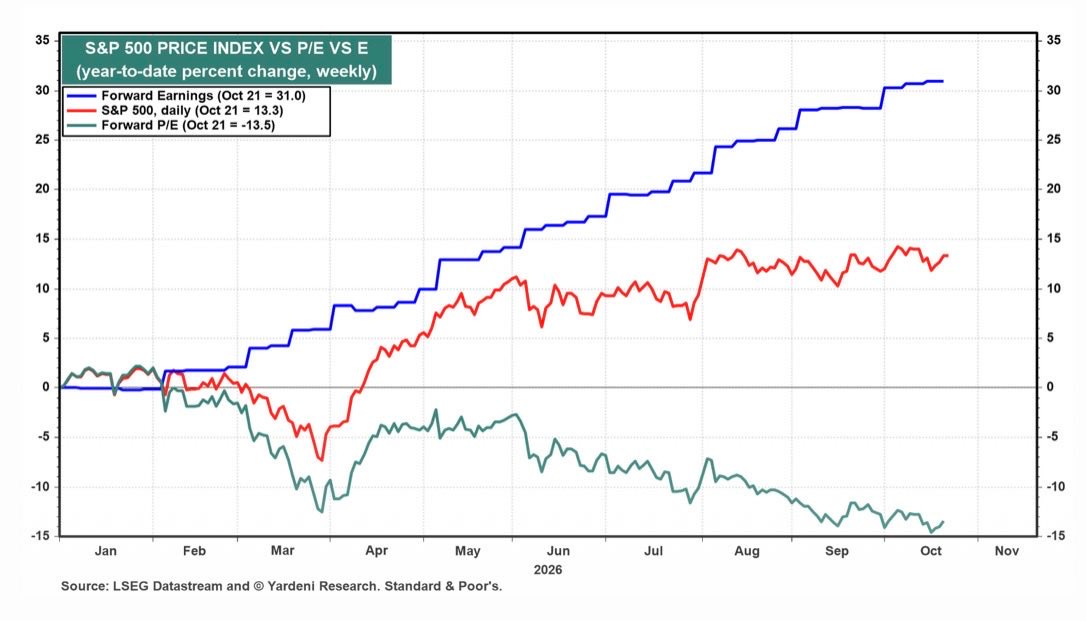
Recent declines have improved valuations, with the Nasdaq’s forward P/E falling below its five- and 10-year averages and the technology sector trading roughly in line with the broader market. However, valuation improvements alone are unlikely to restore confidence immediately. Only when (or if) earnings can continue growing will prices eventually snap back in line. For now, investors and analysts don’t believe their own earnings forecasts, as Ed Yardeni showed recently.
What this means for investors and what’s next
Volatility is likely to remain elevated as investors digest the employment report, reassess December Fed rate expectations, and look for stable footing amid the mudslide in technology stocks. Fresh legislative priorities from the Democratic Congressional majorities over the next few weeks will add further information for investors to measure.
Considering the technicals of the market, the S&P 500’s former support near 7,600 may now act as resistance. The 200-day moving average near 7,300 represents a potential downside target if selling continues.
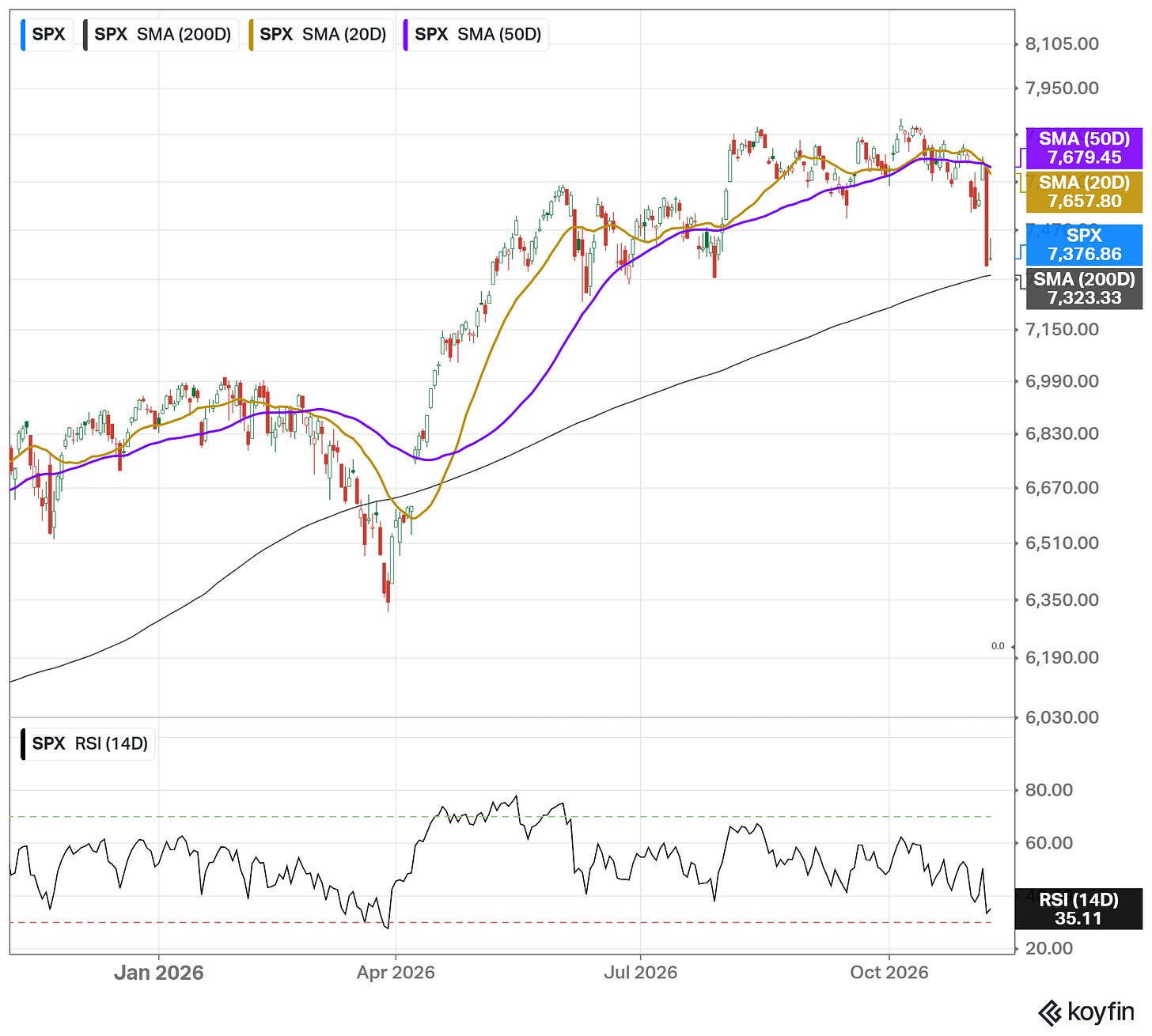
Oversold technology stocks could produce a countertrend, but market breadth and transitioning leadership will be important signals to watch for. The changing market environment reinforces the importance of diversification, quality, and discipline rather than making dramatic portfolio changes in response to a volatile week.
There is no undoing your portfolio positioning in the past. Plant your feet and consider your next move, which very possibly should be no move at all. Related: Tech Selloff Sparks Market Rotation: Small Caps and Value Stocks Take the Lead